Doors opened by trust: Safiullah’s efforts for a safer future for children

Maidan Wardak, Afghanistan – The narrow alleys of Karimdad village in Nerkh District are familiar with the footsteps of Safiullah Amarkhel. For him, these paths are more than routes between homes; they represent a long journey between trust and hesitation.
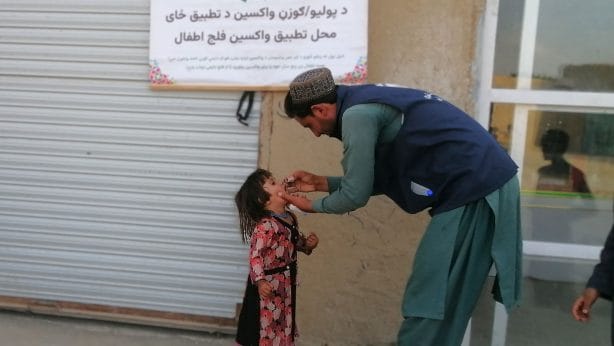
For the past eight years, Safiullah has worked on the front lines of the polio vaccination campaign as a vaccinator. Yet he does not see his role as merely a job defined by salary or official duty. To him, it is a humanitarian mission and a moral responsibility, one aimed at safeguarding the future of children.
The memories of his first days working as a vaccinator remain vivid. At the time, doubts about the polio vaccine were widespread. Some families did not trust it at all. Others believed it could harm their children, while some kept their doors closed simply because they lacked accurate information. Vaccine refusal was a serious challenge, but Safiullah did not give up. He understood that this was not a battle to be won through pressure, but one that required trust, patience, and dialogue.
“I learned that behind every closed door there is a father’s fear and a mother’s concern. If you listen to them, they will listen to you,” Safiullah says.
This principle has shaped the way he works. He does not carry vaccines alone; he brings with him religious reasoning, medical information, and stories drawn from experience. He listens carefully to parents’ concerns, hears their questions, and tries to turn doubt into trust.
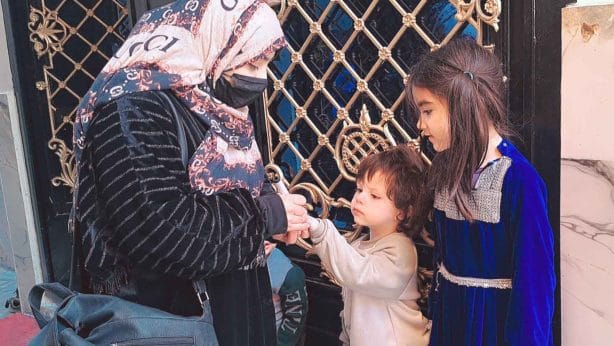
 Safiullah provides information about the polio vaccine to members of a family in Karimdad village, Nerkh District. © Polio Free Afghanistan / 2026
Patience is the most important principle in Safiullah’s daily work. Some families are not prepared to have their children vaccinated the first time, while others need discussion and reassurance before they agree. Safiullah sees all of this as part of his responsibility. He believes that trust is not built in a single day but requires sustained effort and continued engagement.
He still remembers one family that repeatedly refused to vaccinate their children. The father was angry, the mother was fearful, and the children were unaware of what was at stake. On the first day, Safiullah returned empty-handed. He tried again the next day, but without success. On the third day, he knocked on their door accompanied by the village imam and a community leader. The conversation was long. Questions were many, concerns ran deep, but Safiullah and his colleagues remained patient. In the end, trust took root, and the children were vaccinated.
After the vaccinations were administered, the same father who had initially refused spoke calmly and said, “If it hadn’t been for your patience and sincerity, our children might have missed vaccination for life and God forbid, could have been affected by polio.”
Those words eased Safiullah’s exhaustion and reaffirmed his belief that no effort is ever wasted.
Village elder Haji Abdul Raziq, who accompanied Safiullah that day, says, “Safiullah does not only vaccinate children against polio; he also enlightens people’s minds. He has become a pillar of trust in our community.”
Thanks to that trust, the atmosphere gradually began to change. Families who once kept their doors closed to vaccinators now bring their children willingly and with confidence to be vaccinated.
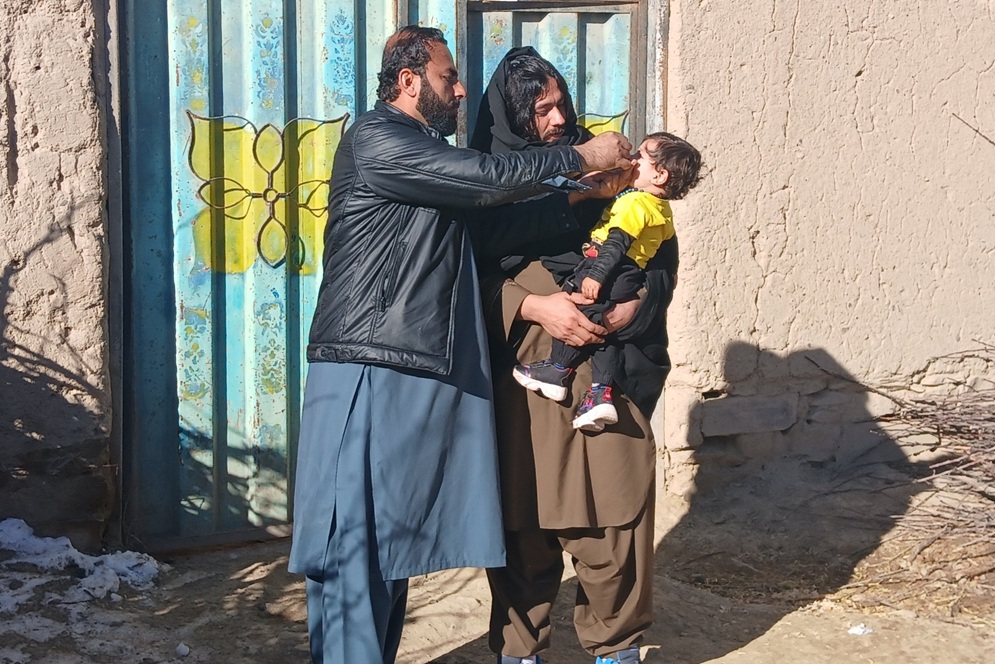 Safiullah administers the polio vaccine to a child during a vaccination campaign. © Polio Free Afghanistan / 2026
Today, Safiullah Amarkhel is a well-known figure across the district. Children smile when they hear his name, mothers remember him in their prayers, and fathers assist him. He believes that the fight against polio is not limited to administering vaccines alone; it also requires public awareness, trust-building within communities, and sustained effort. Safiullah states that, polio has no cure, and only vaccination can protect children from the disease.
He approaches each campaign with renewed hope. Although the path ahead remains difficult and doubts and questions still surface at times, he believes this struggle will succeed, because it is about protecting children’s lives.
“We are not working only for today,” he says. “We are working for tomorrow—for children who deserve to grow up healthy, strong, and free from fear.”
Safiullah knows that change does not come in a single step, but he believes that every child who is vaccinated is spared a serious threat in the future, and that this is of immense value to the community.
Today, in Karimdad and other areas of Nerkh District, the fight against polio continues through these quiet yet persistent efforts. This is the story of people who work with conviction, knowing that children’s health cannot afford delay.
It is this commitment that keeps these efforts alive, so that every child, everywhere, has the right to a healthy and safe future.