A young man’s commitment to a safer future for children
In every community, there are people who turn their commitment to a safer future for children into action. Hamidreza Bahadari is one of them.
Laghman, Afghanistan – In Laghman’s Farajghan Valley, the early morning silence has yet to be broken as Hamidreza Bahadari makes his final checks on the polio vaccination campaign teams. He contacts the teams, reviews their routes and plans for the day, and makes sure each team is on its way to its assigned area.
For him, the greatest measure of success is knowing that by the end of the day, no child has been left without the polio vaccine.
But this story did not begin today. It began several years ago, when Hamidreza first joined a polio vaccination campaign as a volunteer.
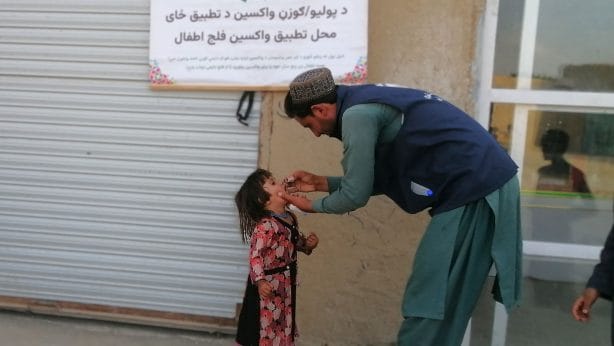
At the time, his role was to go door to door, ensuring that children received the polio vaccine.
Facing families’ concerns, witnessing the threat of polio firsthand, and seeing the impact of vaccination were the experiences that turned Hamidreza’s volunteer work into a lasting commitment.
Now 31 and holding a bachelor’s degree, Hamidreza has served as a polio program coordinator for the past three years. Although he had other career opportunities, he chose to dedicate his time and energy to protecting children’s health.
“When I saw that polio was still threatening the lives of our children, I decided to become part of the fight against this disease,” he says.
As a coordinator, his responsibility isn’t just to organize vaccination teams. He oversees campaign operations, resolves challenges faced by frontline teams, and works closely with families, religious scholars, and community leaders to ensure that every last child receives the polio vaccine.
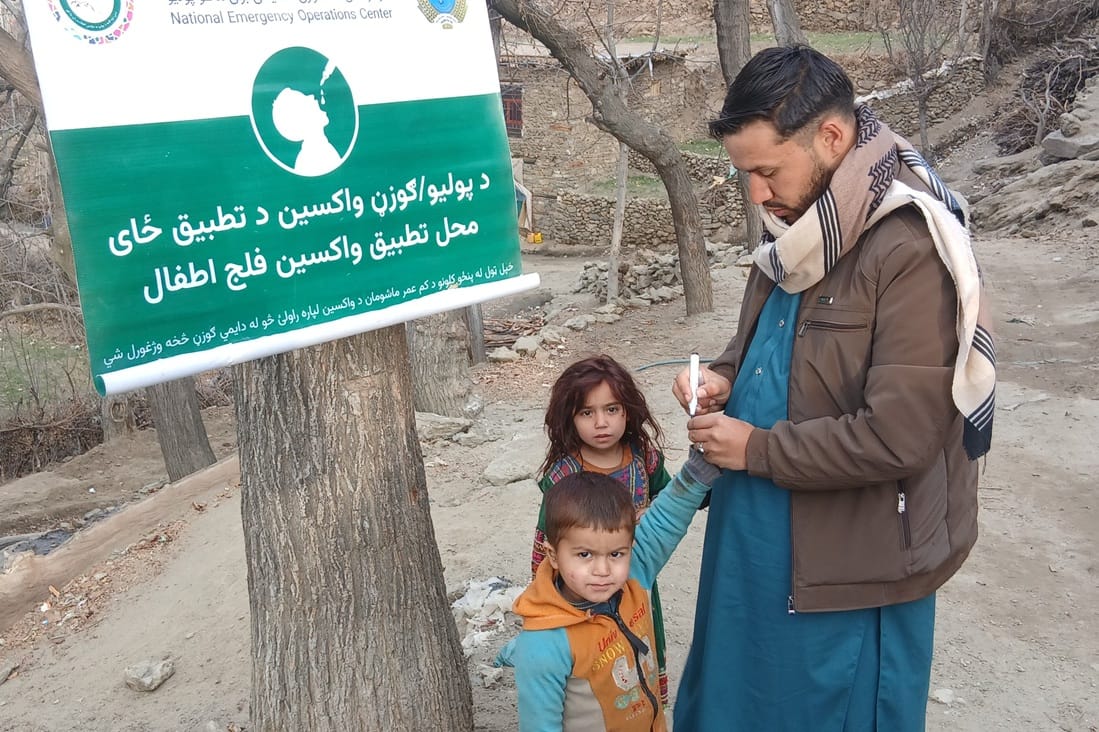
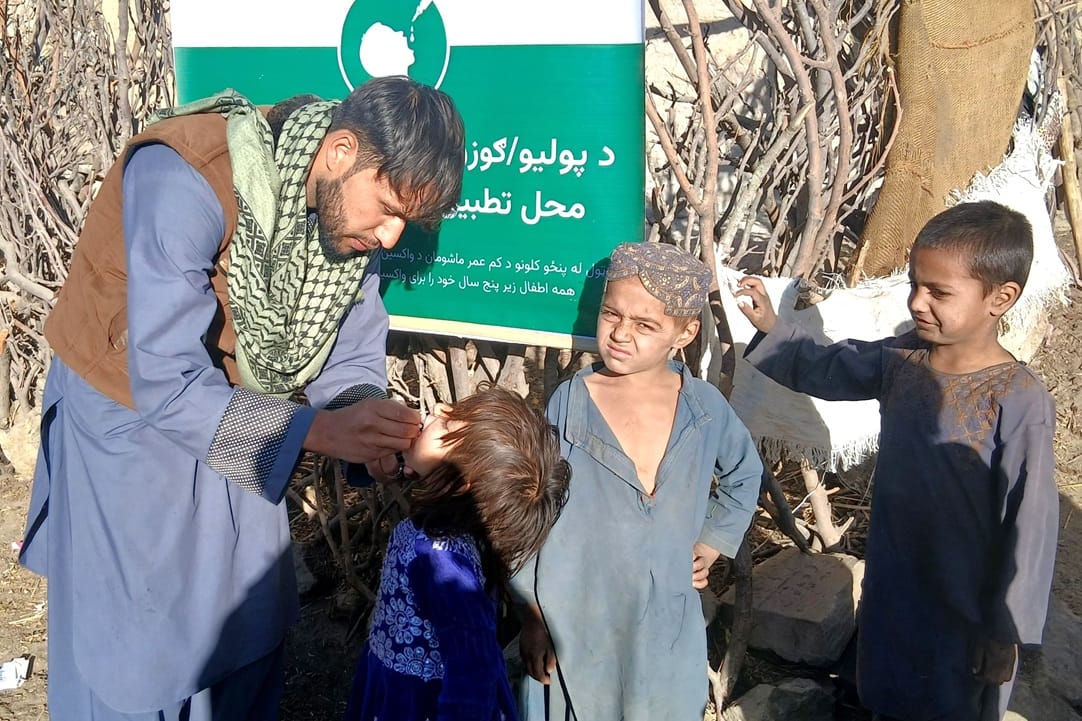 Hamidreza Bahadari administers the polio vaccine to a child in Laghman’s Farajghan Valley.
© Polio Free Afghanistan | 2026
Hamidreza believes that public trust is one of the most important tools in the fight against polio.
“When a family has concerns, we listen first. People want reassurance that their concerns about their child’s health are being taken seriously. When their questions are answered with respect, trust follows,” he says.
The work of vaccination teams in Laghman is not always easy. In addition to the challenges of reaching remote, mountainous communities, some families still have questions and concerns about the vaccine. Hamidreza says that in such situations, the support of religious scholars and community leaders, alongside health workers, plays a vital role in building public trust.
He recalls one particular day during a vaccination campaign: “One day, a family refused to have their child vaccinated. We didn’t rush. First, we listened to their concerns, then explained the dangers of polio and the importance of vaccination. By the end of the conversation, the family was convinced and agreed to have their child vaccinated.”
For Hamidreza, it was about more than vaccinating one child; it was proof that building trust is the foundation of every successful campaign.
Hamidreza says the long days and constant travel during vaccination campaigns sometimes take a toll on his personal life, but his family’s support has always motivated him to keep going.
“My family is proud that I work to protect children. Their support gives me the strength to continue my efforts.”
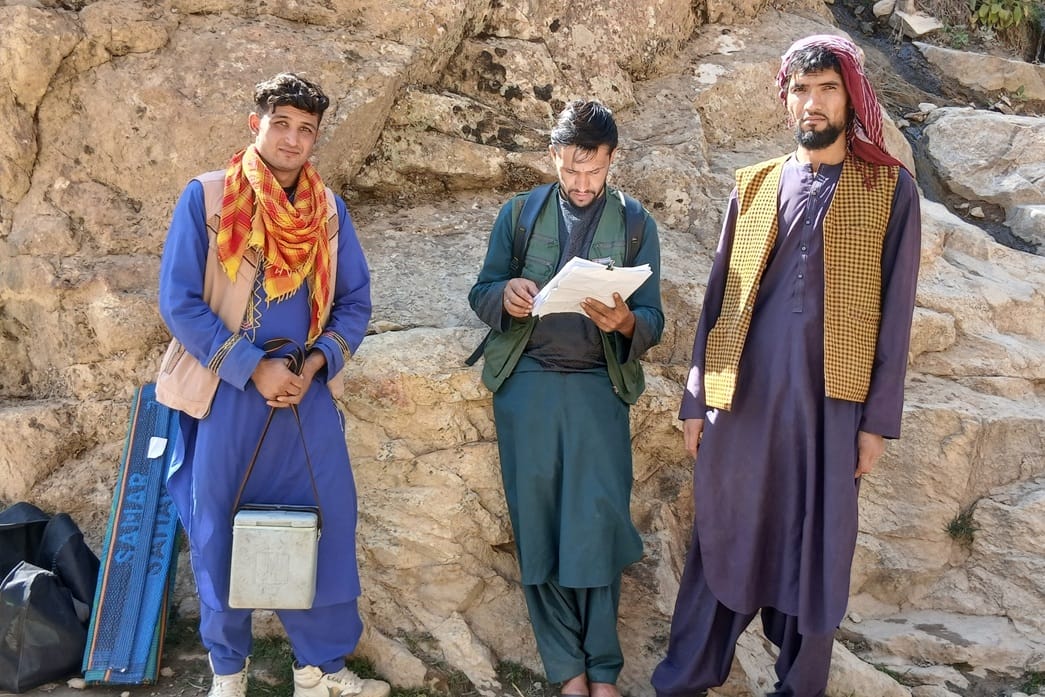 Hamidreza Bahadari reviews a vaccination team’s daily plan and coverage area.
© Polio Free Afghanistan | 2026
Over the years, Hamidreza has seen a noticeable shift in people’s attitudes in his community. He says that, compared with the past, more families now understand the importance of the polio vaccine and work with health teams to ensure their children are vaccinated.
For him, the clearest sign of this change is the moment a child receives the polio vaccine.
“When I see a child being vaccinated and protected against polio, I feel that all our efforts are worthwhile.”
He encourages all parents to make decisions about their children’s health based on accurate information.
“Polio is a serious disease, but it is preventable. If you have any questions about the vaccine, ask a health worker. A few drops of the vaccine can help protect your child’s future.”
At the end of the day, as the vaccination teams return from remote villages, Hamidreza begins planning for the next day’s campaign.
He believes that as long as even one child remains at risk of polio, his work is not done. He hopes that one day Afghanistan will be a place where every child grows up free from the fear of polio.