A young volunteer from Khost has spent the last eight years working to protect children’s future
Shoukatullah believes the fight against polio succeeds by earning parents’ trust. Driven by that conviction, he has dedicated the past eight years to helping build a healthier, polio-free future for children.
Khost, Afghanistan – When Shoukatullah administered polio vaccine drops to two-year-old Ehsan, the fatigue of a long day instantly faded. Earlier, the boy’s father had been hesitant, unwilling to let his son be vaccinated.
But Shoukatullah listened patiently to the father’s concerns, answered his questions, and explained the dangers of polio and the importance of vaccination. By the end of the conversation, the father was convinced and agreed to have his son vaccinated.
For Shoukatullah, this change in a family’s mind means helping secure a healthy future for a child.
The 29-year-old volunteer, a resident of Hasan Kot village in Matun, the provincial capital of Khost, has spent the past eight years working in polio vaccination campaigns to help protect children in his community from lifelong paralysis.
“Every day I leave home, I have just one goal: that no child should face the threat of polio,” he says.
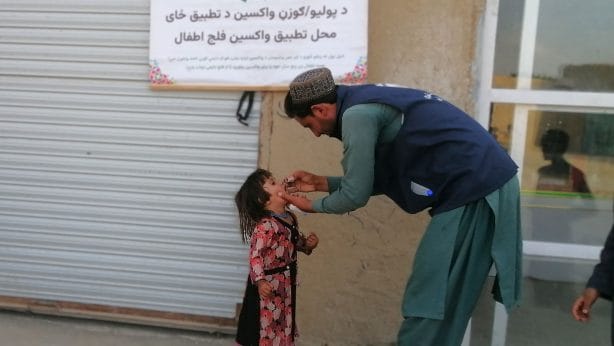
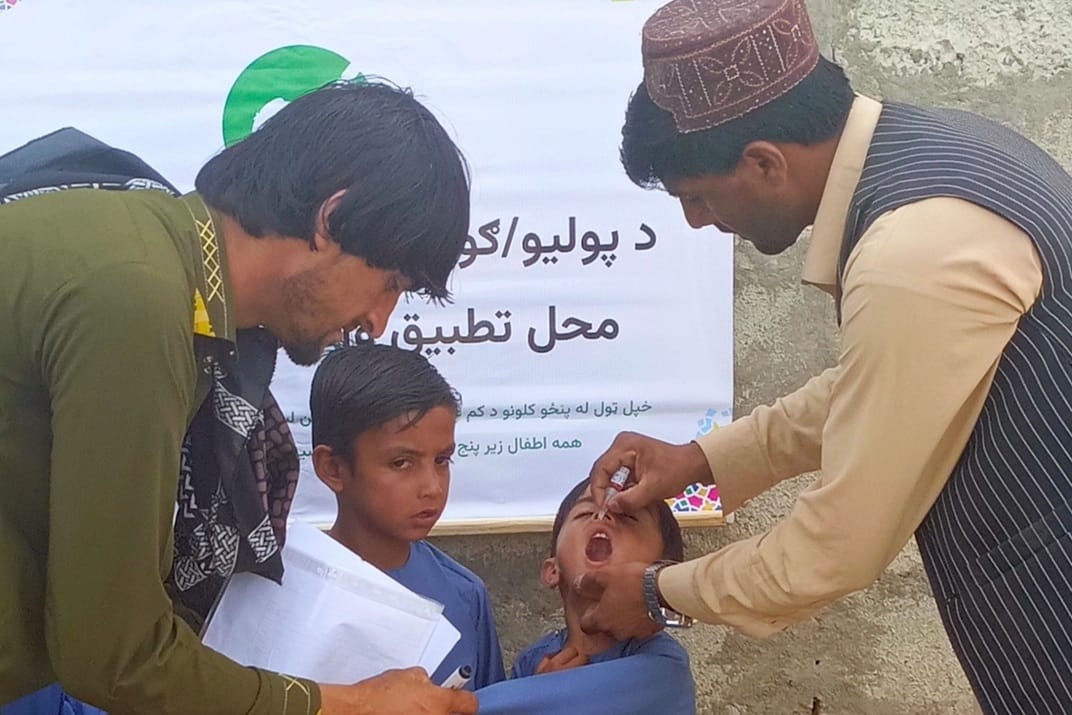 Shoukatullah administers polio vaccine drops to a child; for the past eight years, he has worked to secure a safer future for the children of his community.
© Polio Free Afghanistan | 2026
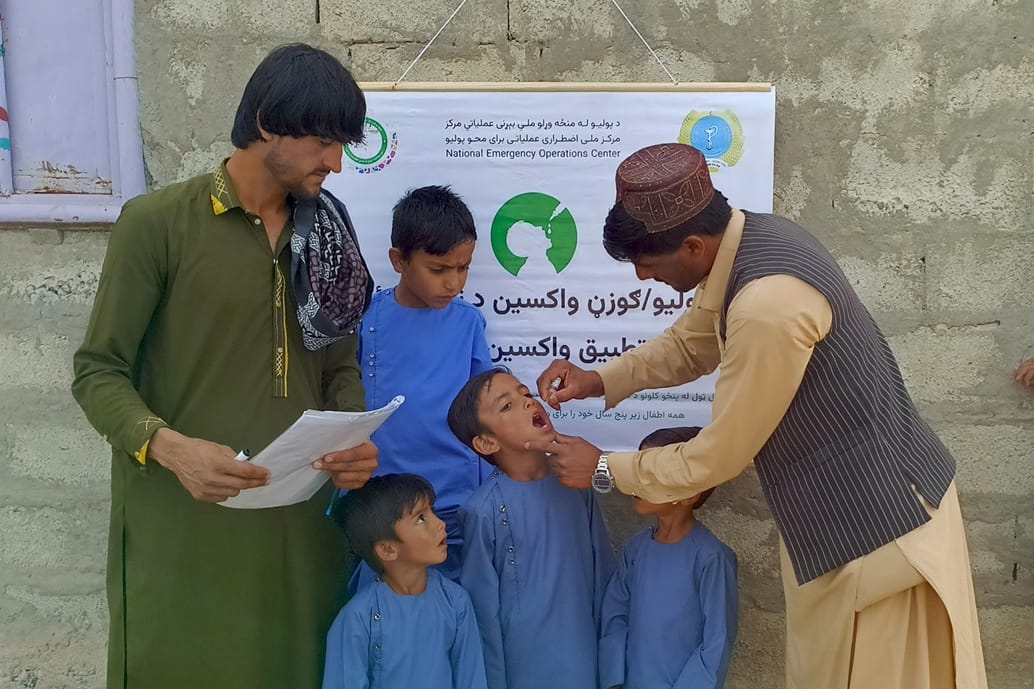
His day begins early in the morning. Alongside his team, he travels from village to village, administering vaccines to children and talking with parents who still have concerns or questions about the polio vaccine.
Recalling the experience with Ehsan’s family, he says: “I spoke calmly with the boy’s father, explained the risks of polio, and told him that the decision made today would shape the child’s future. When he finally agreed to vaccinate his son, I knew that our efforts weren’t in vain.”
Shoukatullah says that a key part of the fight against polio is earning people’s trust. Once a family comes to trust the vaccine, they share that trust with other families, making it easier for others to accept vaccination as well.
He adds that over the past eight years, he has seen a significant change in public awareness. “Families who once had doubts about vaccination are now cooperating and bringing their children for immunization themselves. When I see parents prioritizing their children’s health, I feel that our awareness efforts are truly making an impact.”
Shoukatullah believes that eradicating polio is not the responsibility of health workers alone. The cooperation of every family is essential to achieving this shared goal.
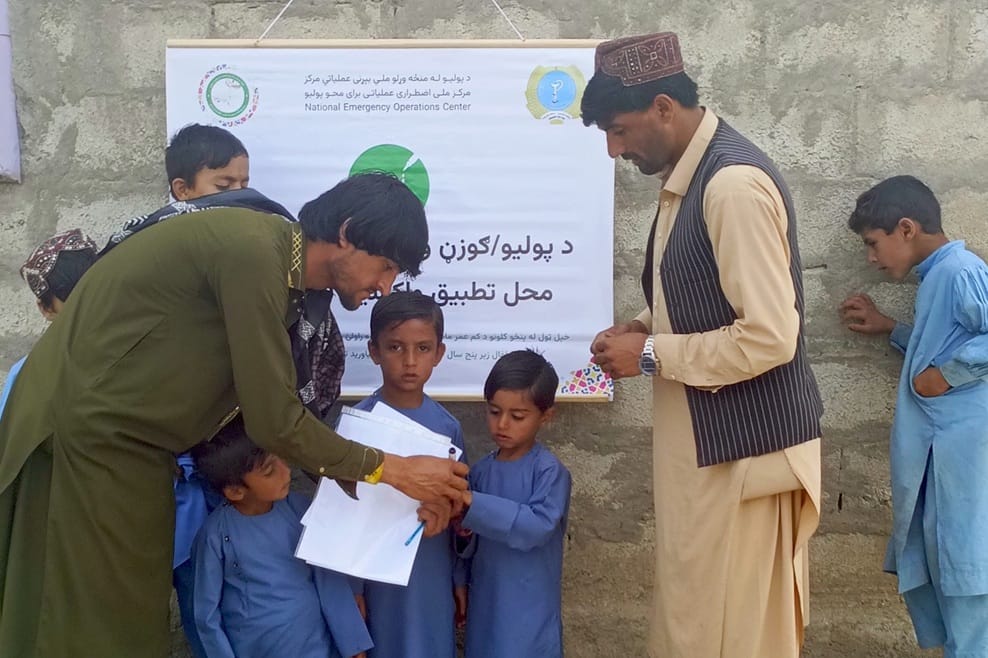 Shoukatullah believes that every vaccinated child brings Afghanistan one step closer to eradicating polio.
© Polio Free Afghanistan | 2026
Afghanistan remains one of the few countries in the world where the poliovirus has not yet been completely eradicated. Although immunization coverage has increased in recent years thanks to vaccination campaigns, community awareness, and the tireless efforts of health workers, every child who is left unvaccinated remains at risk of polio and gives the virus a chance to spread. For this reason, every vaccination campaign and the cooperation of every family are considered an important step toward eradicating polio.
Shoukatullah says: “I want to see the day when polio is only a part of history, not a tragic chapter in children’s lives. The day when no child is paralyzed by this disease, when every child goes to school, plays, and pursues their future on their own feet.”
At the end of the day, when Shoukatullah finishes his work and returns home, Ehsan’s father’s final words echo in his mind. He has promised that from now on he will ensure his child is vaccinated on time in every campaign.
For Shoukatullah, the greatest achievement of the day is not only the number of children vaccinated, but the reassurance that another family has committed to vaccinating their child in future campaigns. He says it is this sense of reassurance that gives him the strength to continue his fight against polio.