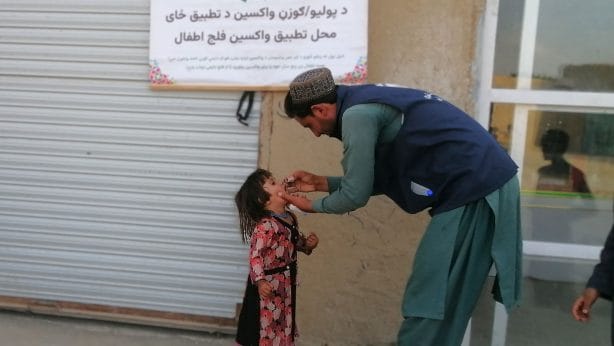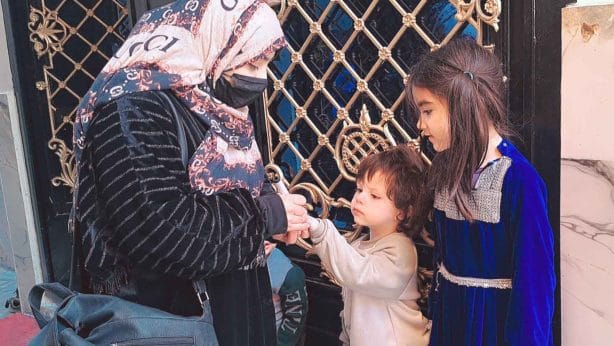
Every vaccinated child; a step toward a safer future
Abdul Rahim Mohammadi began volunteering in polio vaccination campaigns eight years ago. Today, although he serves as a program coordinator, his goal remains the same: ensuring that no child falls victim to polio-a disease that has no cure, causes lifelong paralysis, but can be prevented through vaccination.
Nangarhar, Afghanistan – It’s the first morning of the polio vaccination campaign in the Shahidan Mena area of Rodat district, Nangarhar province. Abdul Rahim Mohammadi reviews the day’s plan with members of his teams. Shortly after, the teams hoist vaccine carriers onto their shoulders and set off toward the villages.
For him, it is another opportunity to protect children from polio. A disease that has no cure and can only be prevented through vaccination.
Now 27, Abdul Rahim joined polio vaccination campaigns as a volunteer in 2018, delivering vaccines door-to-door to children. After gaining several years of experience, he now works as a program coordinator, taking part in campaign planning, team coordination, monitoring, and evaluation.
“When I started as a volunteer, I made every effort to make sure no child missed vaccination, because every child left out could be at risk of polio,” he says.
 © Polio Free Afghanistan | 2026
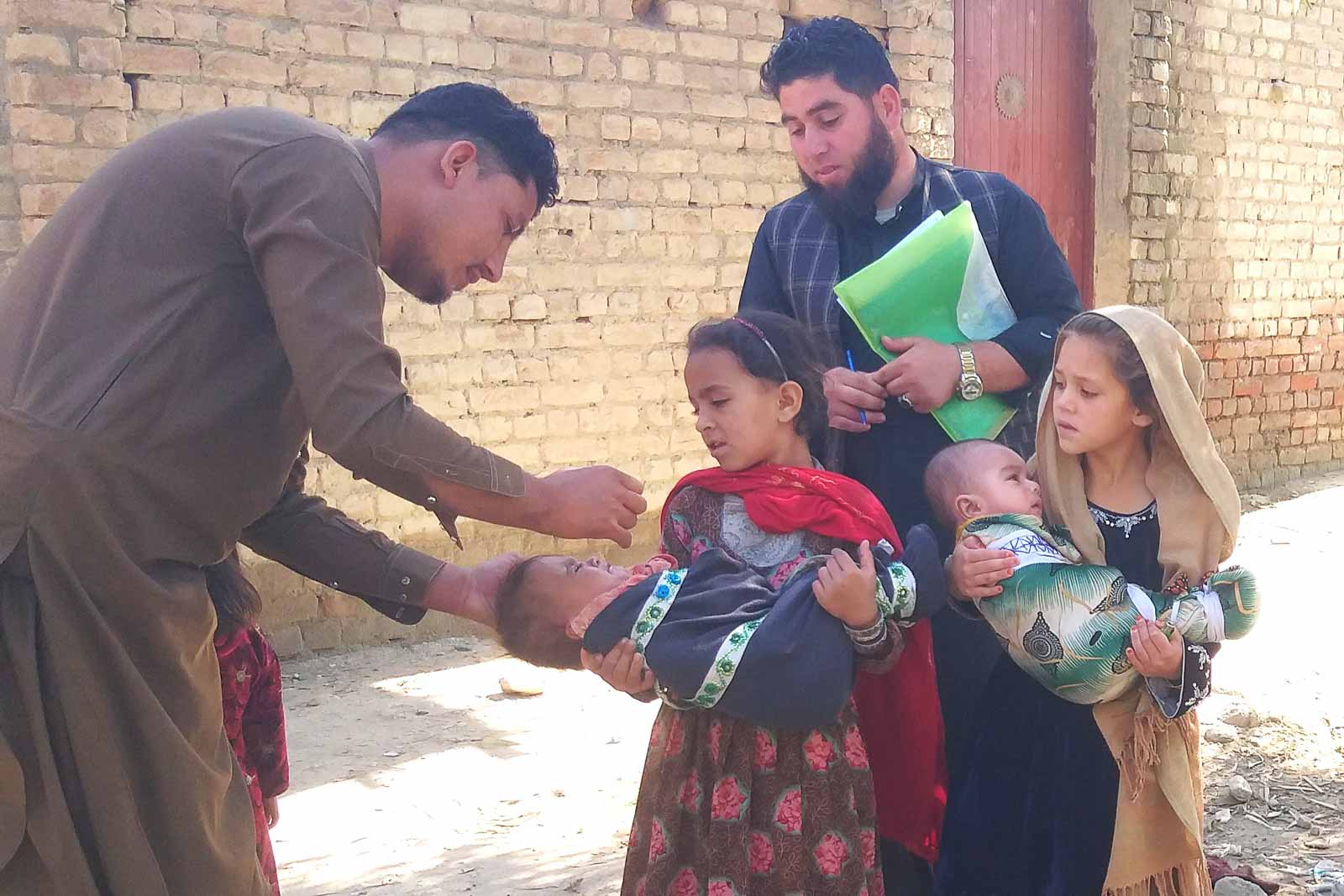
Abdul Rahim Mohammadi monitors the work of a vaccinator during a polio vaccination campaign.
During campaign days, Abdul Rahim’s work extends beyond the office. After the morning meeting, he travels to different areas, monitors teams’ work, talks with families, and makes sure vaccines reach every child. When needed, he also vaccinates children himself and answers parents’ questions.
According to Abdul Rahim, the most important part of the fight against polio is earning people’s trust.
He recalls one memory from his work: “One day, we went to a house with a vaccination team, but the child’s father refused to have his child vaccinated. ‘My child is healthy and doesn’t need the vaccine,’ he said.”
Abdul Rahim says he first listened carefully to the father’s concerns. Then he explained that polio has no cure and can only be prevented through vaccination. He also told him that even a child who appears completely healthy is not necessarily protected from polio, because the disease does not always begin with visible symptoms.
“I told him, ‘If a child isn’t vaccinated, not only does he face the risk of permanent paralysis himself, but he could also transmit the virus to other children. Giving a few drops of the vaccine isn’t just protecting one child; it’s also important for keeping the children of the whole community safe.'”
He says that after this conversation, the father was convinced and allowed his child to be vaccinated.
In his view, although concerns about the polio vaccine have decreased over the years, some parents still think that if a child looks healthy, they don’t need the vaccine, or that natural immunity is enough.
He says this is why speaking with families and sharing health information during campaigns is just as important as administering the vaccine itself.
 © Polio Free Afghanistan | 2026
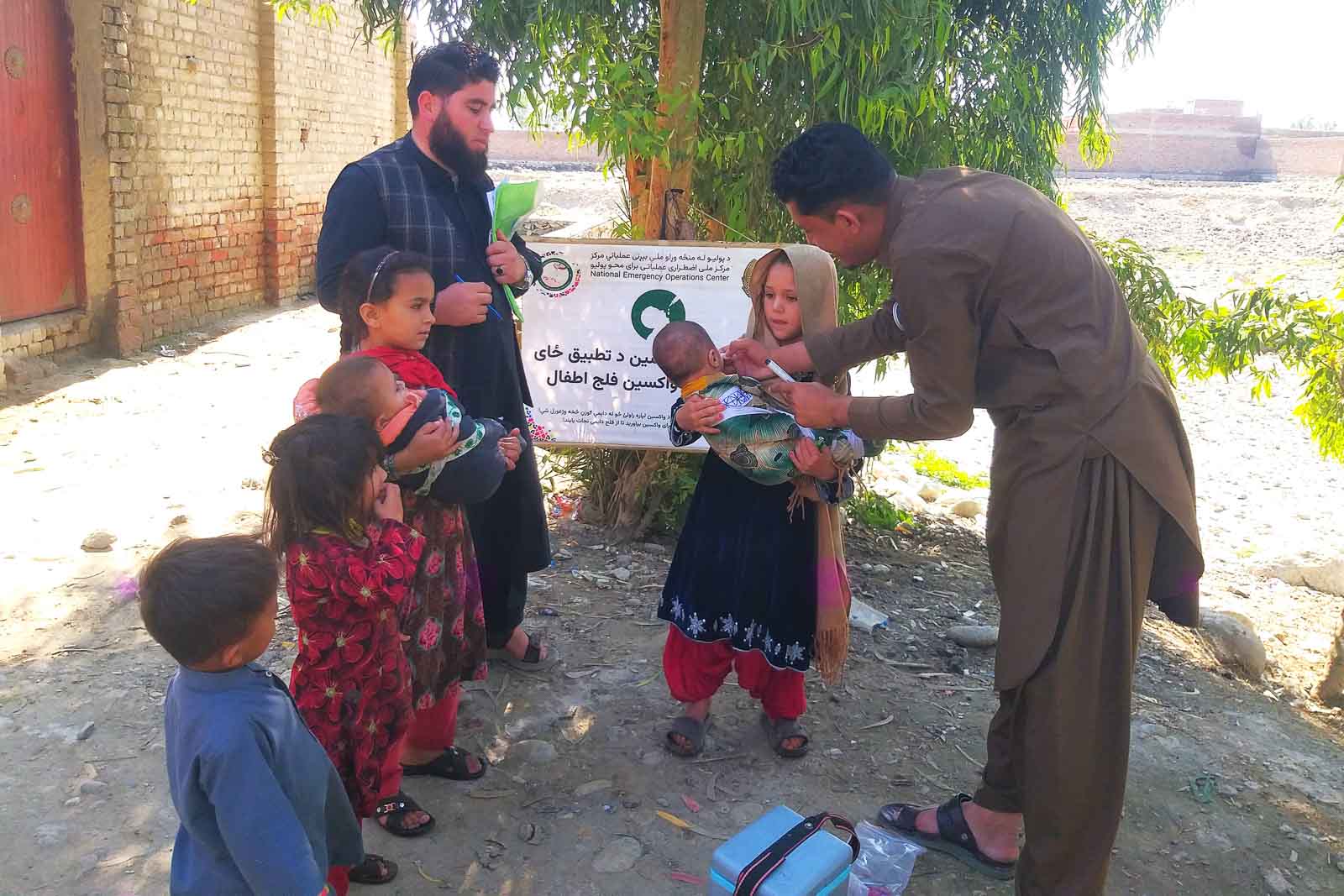
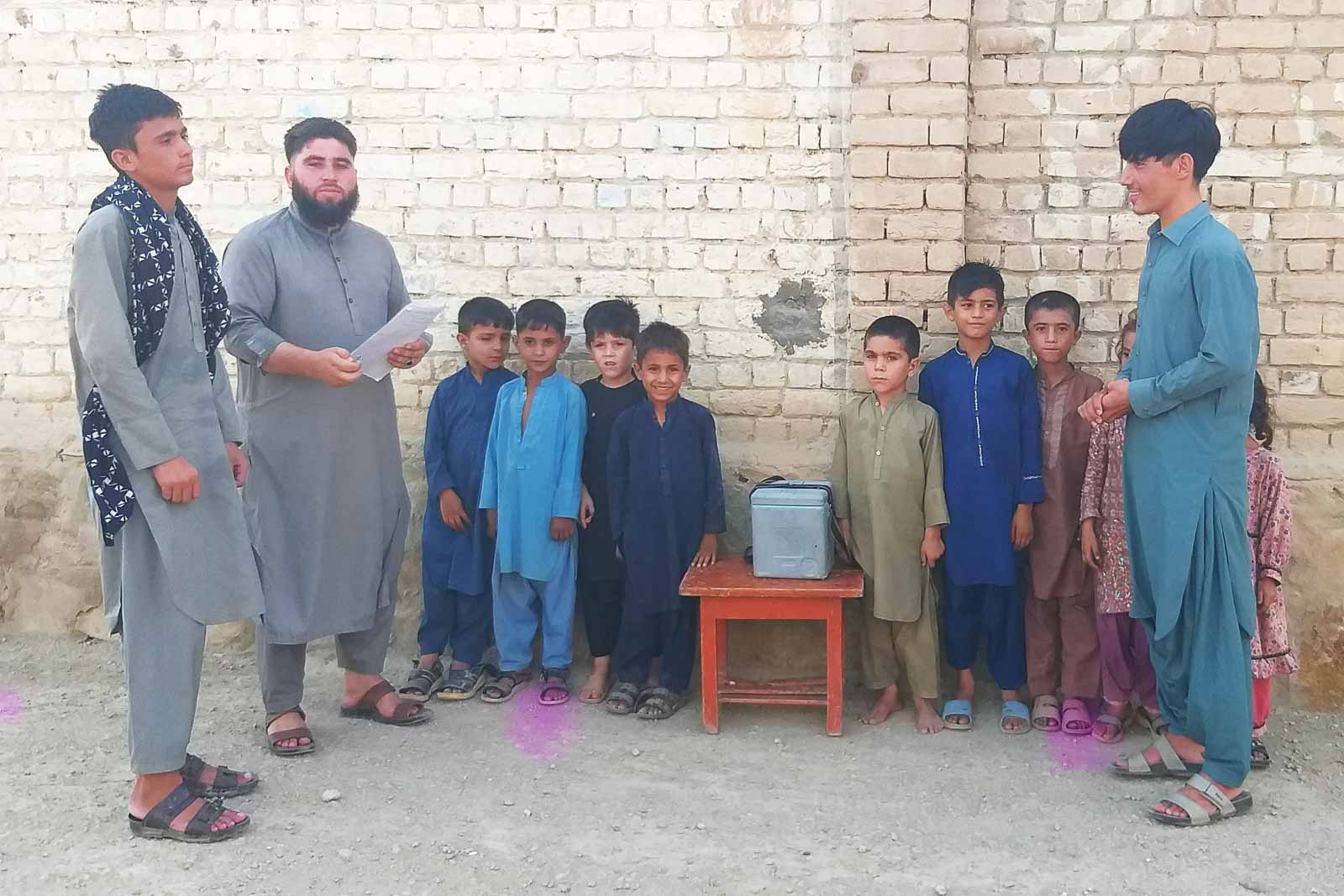
Abdul Rahim Mohammadi with a vaccination team and children during a polio vaccination campaign in Rodat district.
Abdul Rahim adds: “People trust you when they feel they’re being listened to. We first listen to their concerns and then try to respond based on accurate health information. Support from religious scholars, tribal elders, and community elders also has a strong impact on building trust with people.”
This work hasn’t only added to Abdul Rahim’s professional experience but
has also taught him the value of building relationships with people, listening to their concerns, and resolving problems patiently.
“This work has taught me that serving people is not just a job; it is a responsibility,” he says. “Every time a child is vaccinated, I feel that we have taken another important step toward ensuring a safe and healthy future for that child.”
Abdul Rahim’s father, Dr. Abdul Ghafar Mohammadi, who is also a medical professional, takes pride in his son’s work.
“For a father, the greatest joy is seeing his child serve the people. Polio is a disease that can be prevented through vaccination, and I’m happy that my son plays a part in this effort to protect children’s health,” he says.
Polio eradication efforts in Afghanistan rest on the combined work of thousands of health workers, volunteers, coordinators, community leaders, and families. Abdul Rahim believes that every small step in this joint effort can protect a child’s life from lifelong disability.
“The day Afghanistan becomes polio-free will not be the success of a single program; it will be a shared achievement of all the families, health workers, and communities that have worked for years to build a safer future for children,” he says.