
Little health ambassadors: from schools to homes, a new drive for polio awareness
In Nangarhar, hundreds of students are learning about polio through quiz competitions to dispel vaccine skepticism under their own roofs and protect their younger siblings from lifelong paralysis.
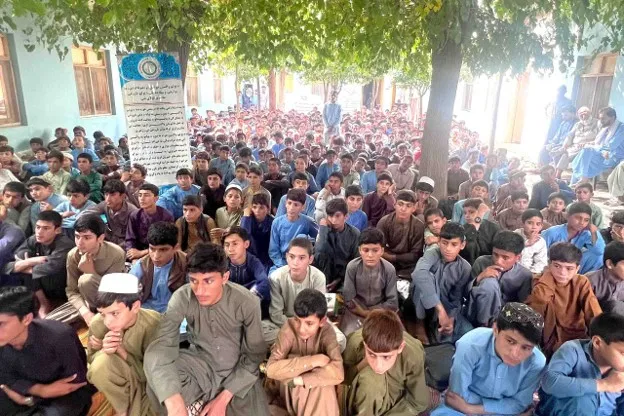
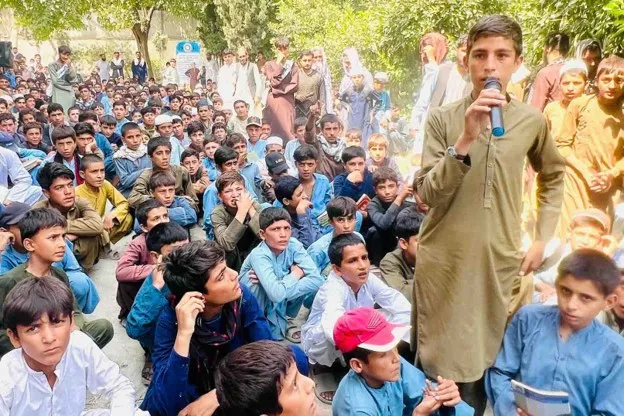
Nangarhar, Afghanistan - The sprawling courtyard of Nangarhar Central High School is alive with the chatter and energy of hundreds of students. Alongside their daily lessons, they have gathered today for a quiz competition whose outcome is tied to the lives and futures of thousands of children.
Every time the moderator asks about the dangers of polio or the value of immunization, dozens of hands shoot into the air, each student eager to answer first.
But these youngsters are not here just to win a prize. They have taken on something bigger and far more serious: protecting their younger brothers and sisters from polio.
A recent rise in polio cases across eastern Afghanistan has alarmed health workers and families alike. Polio is a paralyzing and deadly disease with no cure. The only way to prevent it is to give children under five two drops of the vaccine during every campaign round.
To counter the threat, a public awareness campaign began in schools about a month ago, funded by UNICEF and run with technical support from Nangarhar’s education department. So far, it has reached six major schools across Jalalabad city and the districts of Behsud, Chaparhar, and Rodat.
© Polio Free Afghanistan | 2026
Learning that saves lives: Nangarhar students listen closely to polio prevention messages so they can pass the information on to their families.
From schools to homes: Building trust
In Afghan society, family elders, grandparents especially, often have the final say on children’s health. Rumors and misinformation often leave families wary of vaccines, but this school initiative aims squarely at that gap.
Hamza Mubarak, a seventh-grader at Shahid Malang Jan High School, knows that hesitation firsthand. At home, his paternal grandmother has long mistrusted the polio vaccine, harboring doubts. Now, after participating in the program, Hamza feels responsible for changing that.
"Once I took part in the school program and got the real facts, I knew I had to talk with my grandmother," Hamza says with conviction. "I want to explain what I learned here to put her mind at ease and show her the facts she had never heard before."
Like Hamza, 15-year-old Irfanullah, an eighth-grader at Nangarhar Central High School, believes learning through competitive quizzes is an effective way to impact how young people think. The competitions spark real enthusiasm, he explains, encouraging students to look beyond their standard curriculum and care about community health. He hopes the initiative expands so more students learn about the dangers of polio.
Shahidullah, a sixth-grader at Shahid Malang Jan High School, has a clear, direct message for families: "Families shouldn’t hide their children from the vaccinators. They must get them vaccinated, no matter what."
© Polio Free Afghanistan | 2026
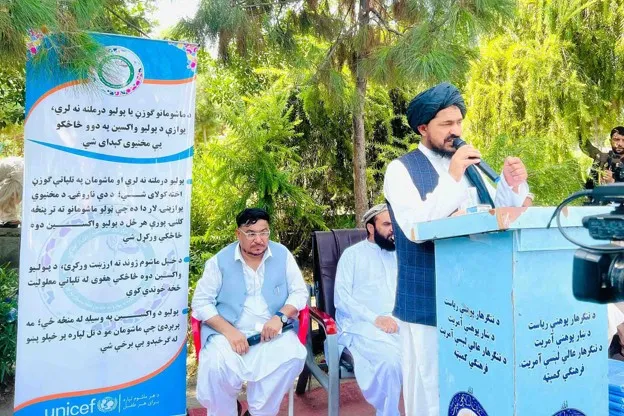
An education official addresses students in the courtyard of Nangarhar Central High School on the dangers of polio and the importance of vaccinating children under five.
Schools: Powerful hubs for health awareness
Teachers and education officials in Nangarhar believe schools do far more than teach the curriculum; they see them as powerful centers for public awareness and saving lives.
Din Mohammad Mohammadi, a teacher at Shahid Malang Jan High School who has seen the disease's toll in his community, puts it plainly: "The polio vaccine is a lifeline for our community because we see what this disease does with our own eyes. Children who weren’t vaccinated are living with lifelong paralysis today. Students have a close bond with their families; when they learn the facts here, they can easily carry them home."
The school’s principal, Zalmai Halim, also calls the effort highly worthwhile. "This program is very effective and valuable for our children, our community, our educators, and everyone in the country," he says.
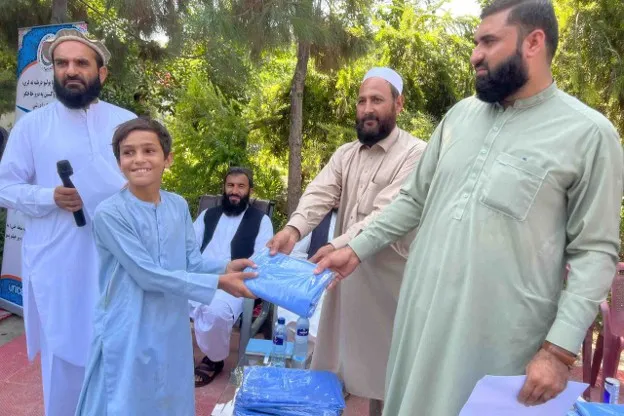
Top-performing students also received prizes, Halim noted, an incentive that fuels their enthusiasm to take part in future health and education activities.
© Polio Free Afghanistan | 2026
A young student receives a prize from school officials after answering questions correctly in the polio quiz competition.
Next steps toward a polio-free future
The initiative’s early success and the students’ warm reception have prompted the Nangarhar Department of Education to expand the program further.
Mawlawi Liaqat Ali, deputy director of the education department, says officials have developed a structured plan to sustain and expand the effort, drawing on existing school resources and local health teams.
"We intend to expand school health committees and work for the common good to confront these viral diseases," he adds, "ensuring this message reaches everyone."
Ultimately, eradicating polio takes more than vaccination campaigns alone; it hinges on the awareness and cooperation of families.
When the final bell rings at schools in Nangarhar and students head home, they carry more than books in their backpacks. They carry lifesaving knowledge that could shield Afghanistan’s next generation from lifelong paralysis.
© Polio Free Afghanistan | 2026
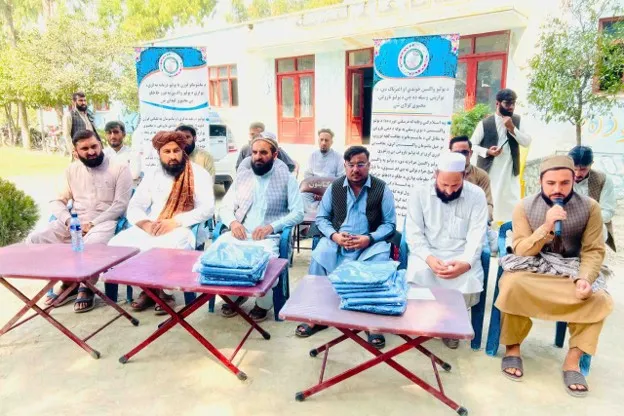
The school principal, teachers, and health committee members conduct the polio quiz competition, testing students on the importance of the vaccine.
© Polio Free Afghanistan | 2026
The voice of a little health ambassador: A student in Nangarhar speaks on the importance of the polio vaccine, urging families to vaccinate their children and protect them from paralysis.