A young man's efforts to improve children's health in Paktika
Five years ago, Ghami Mohammad Yar began volunteering to improve the health of children in his community. Now a supervisor overseeing teams during polio vaccination campaigns, he has witnessed firsthand how people’s trust in vaccines and their attitudes toward vaccination have changed.
Paktika, Afghanistan - A polio vaccination team visited the home of an elderly man in Mashkhel village, Yousafkhel district, several times, but he would not allow his grandchildren to be vaccinated. Misconceptions about the vaccine had led him to keep his grandchildren from receiving it.
Ghami Mohammad Yar and his colleagues tried talking with the elderly man and listening to his concerns, but he remained unconvinced. Later, they approached him with the help of a village teacher, Fazal Karim. The teacher’s words had an impact on the elderly man, and he eventually agreed to have his grandchildren vaccinated.
For Ghami, this was not just about vaccinating two children. The experience showed him that trusted figures in a community can play a key role in delivering health messages and shaping families’ decisions.
Ghami is 34 and lives in Mashkhel village, Yousafkhel district, Paktika. He completed his education through 12th grade. Five years ago, he began volunteering to help prevent polio, and for the past four years, he has worked as a supervisor, overseeing vaccination teams and coordinating their activities.
He grew up in this same rural setting. His familiarity with the local people, customs, and the role of elders gave him a close understanding of his community’s concerns and sensitivities.
He was unable to continue his education after 12th grade, but the health of his community’s children never left his mind.
"Whenever I saw parents neglecting their children’s health, it pained me,” he says. “That feeling, along with a desire to serve, motivated me to do something for the children and families in my community."
When the opportunity to volunteer in the polio prevention program came up, Ghami saw it as a fitting way to serve his community.
But in the early days of his work, convincing people to vaccinate their children was not easy. Some families rejected the vaccine, some hid their children, while others were concerned because of misinformation about vaccination.
 © Polio Free Afghanistan | 2026
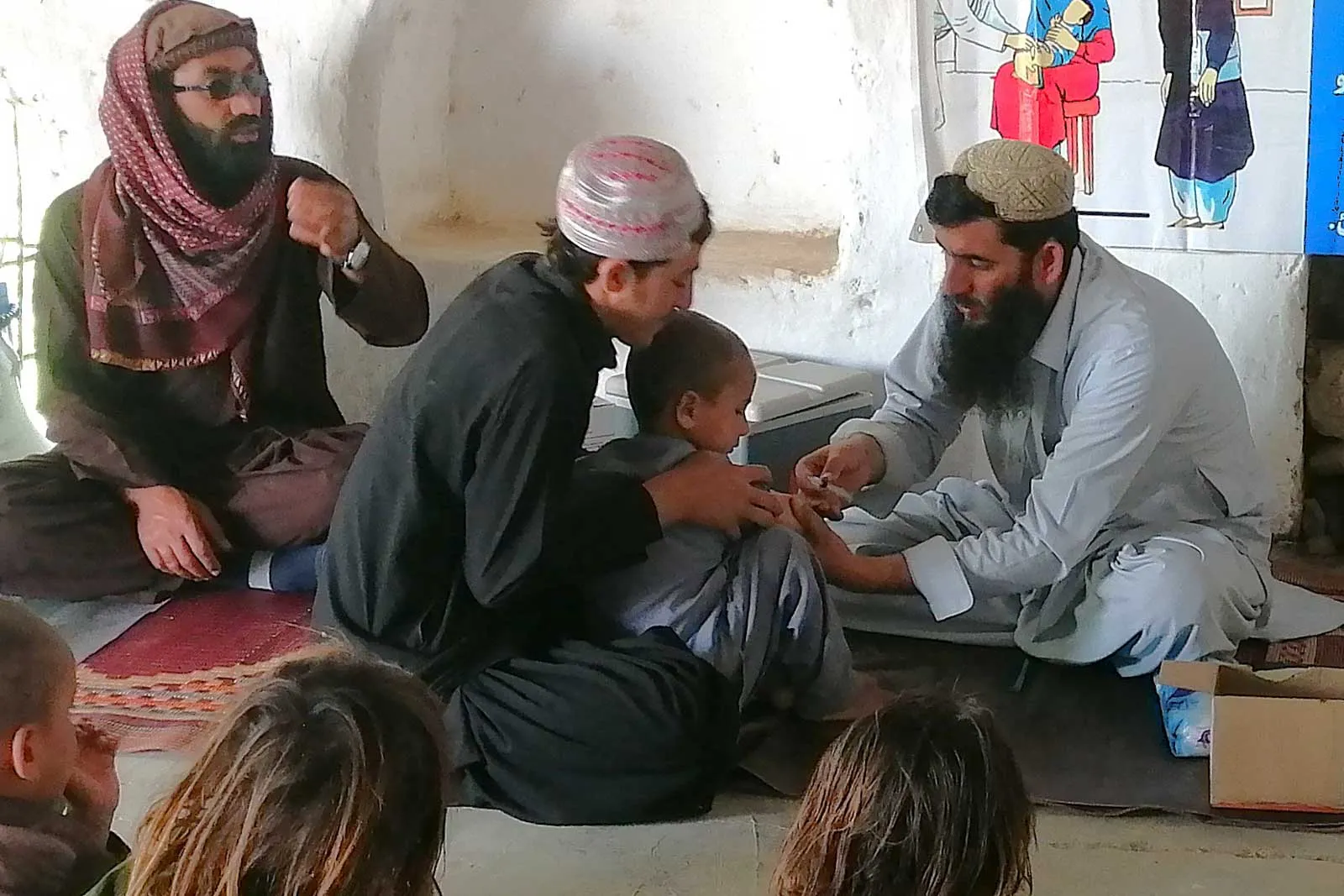
Ghami vaccinates a child in the Mashkhel area of Yousafkhel district, Paktika province.
There were also misconceptions in the community that vaccines could stunt children’s growth or affect their behavior later in life.
Ghami and his colleagues chose dialogue and awareness-raising to address these concerns.
"When a family refuses vaccination, we first try to understand the reason behind their refusal. Then we provide accurate information about the vaccine and answer their questions. Trust isn't built in a day; it takes time, patience, and continued dialogue," he says.
If a family wasn't convinced on the first visit, they would stay in touch and speak with them again on a later visit.
Ghami had this same experience not only with his community, but within his own household. His family was not entirely supportive of his work at first.
"They would say, 'Why have you gotten yourself involved in this kind of work?' I would tell them 'This is work to protect the health of people’s children.'"
Later, as his family came to understand the value of his work and the importance of vaccinating children, they began to support him.
Ghami says that compared to previous years, there has also been a change in people's awareness and behavior. Families who once refused to cooperate with vaccination teams now listen to them and have their children vaccinated.
 © Polio
Free Afghanistan | 2026
© Polio
Free Afghanistan | 2026
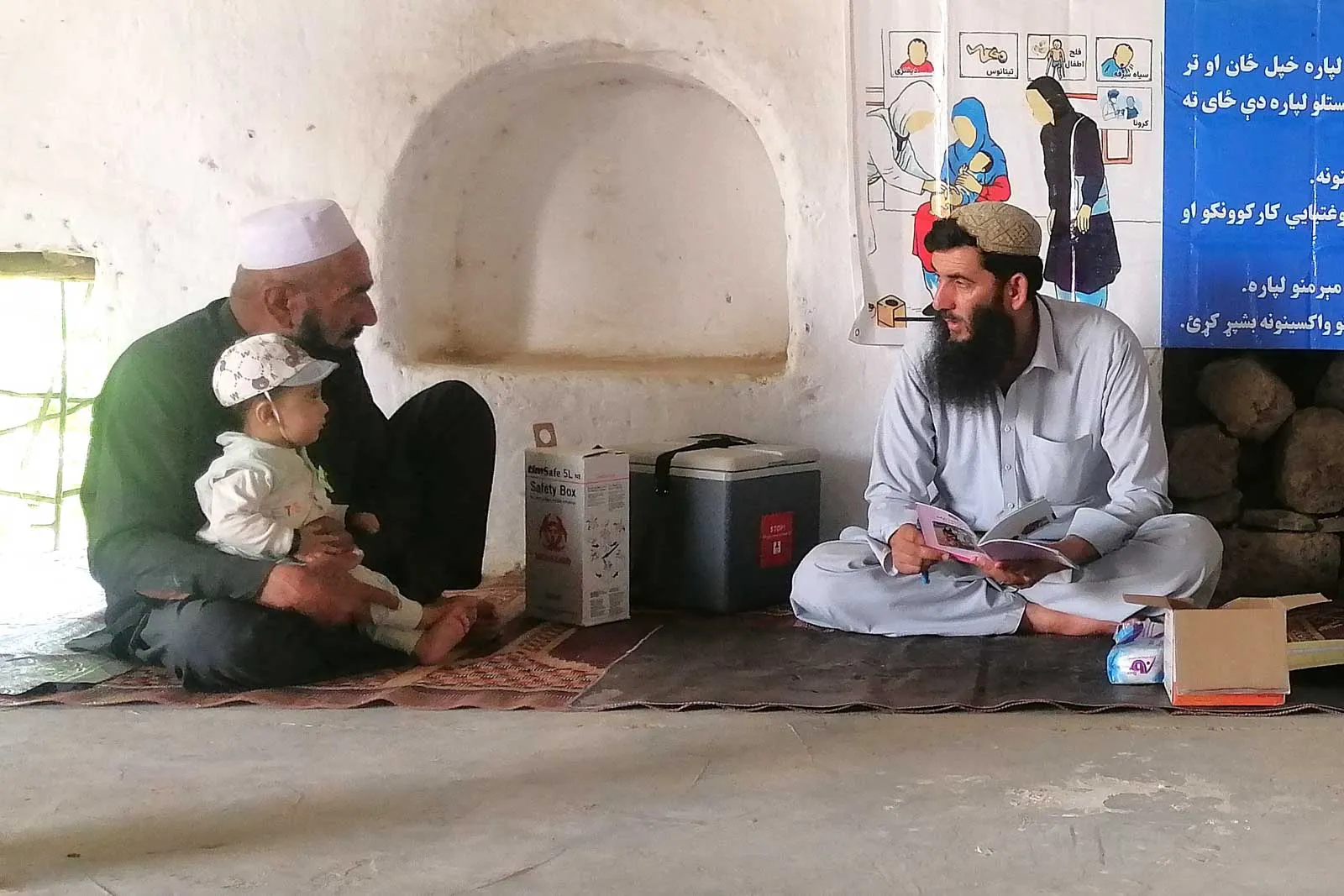
Speaking with a child’s father about polio vaccination and providing information during a polio vaccination campaign.
Under Ghami’s supervision, up to 210 children are vaccinated during each campaign, depending on the conditions in the area, and up to 70 families receive information about children's health.
But for him, the value of the work cannot be measured in numbers alone.
"Numbers alone don't matter to us; what matters is that families get the information and choose, of their own will, to vaccinate their children."
Alongside vaccination, families also receive information about hygiene, healthy food, and proper nutrition for children.
In Ghami’s view, trusted community figures play an important role in the success of this work. Religious scholars, teachers, tribal elders, and elders can answer people's questions in their own language and reinforce the message of health workers.
He encourages young people to do what they can to serve their communities.
"If a young person convinces just one family to care about the health of a child, that in itself is a great service."
Ghami's greatest hope is that one day, no child in his area or anywhere in Afghanistan will face permanent paralysis because of polio.
"My hope is that, one day, all our children will be healthy, and polio will be remembered only as a disease from the past."