
On rough paths, to every child
For the past five years, Wasiullah has supervised polio vaccination teams in the mountainous areas of Nuristan Province, working to ensure that no child is left unvaccinated.
Nuristan, Afghanistan - In the mountainous areas of Kamdesh District, some villages are very far from one another, and getting from one to the next means a long, hard journey over rough routes. Steep, uneven terrain and homes spread far apart also affect the conditions in which vaccination teams work.
Wasiullah knows these conditions well. The 26-year-old has been working as a polio vaccination team supervisor for the past five years. Drawing on his familiarity with the area's geography and communities’ living conditions, he coordinates and monitors vaccination teams to help ensure that vaccines reach even the most remote households and that no child is missed.
For him, that is the most important goal of every campaign.
Alongside the people of his area
Wasiullah grew up in this area and has had close ties to his community since childhood. He has a bachelor's degree and has always tried to use his knowledge and experience to serve others.
"I spent my childhood in this area. Since I was young, I've seen the hardships of the people here, and I've always tried to use my education and experience to serve them," he says.
In an area where access to health services is limited, he says, serving children's health holds special value for him. That is why he decided to work with the polio program.
"Children's health and serving people have been the main motivations for my work."
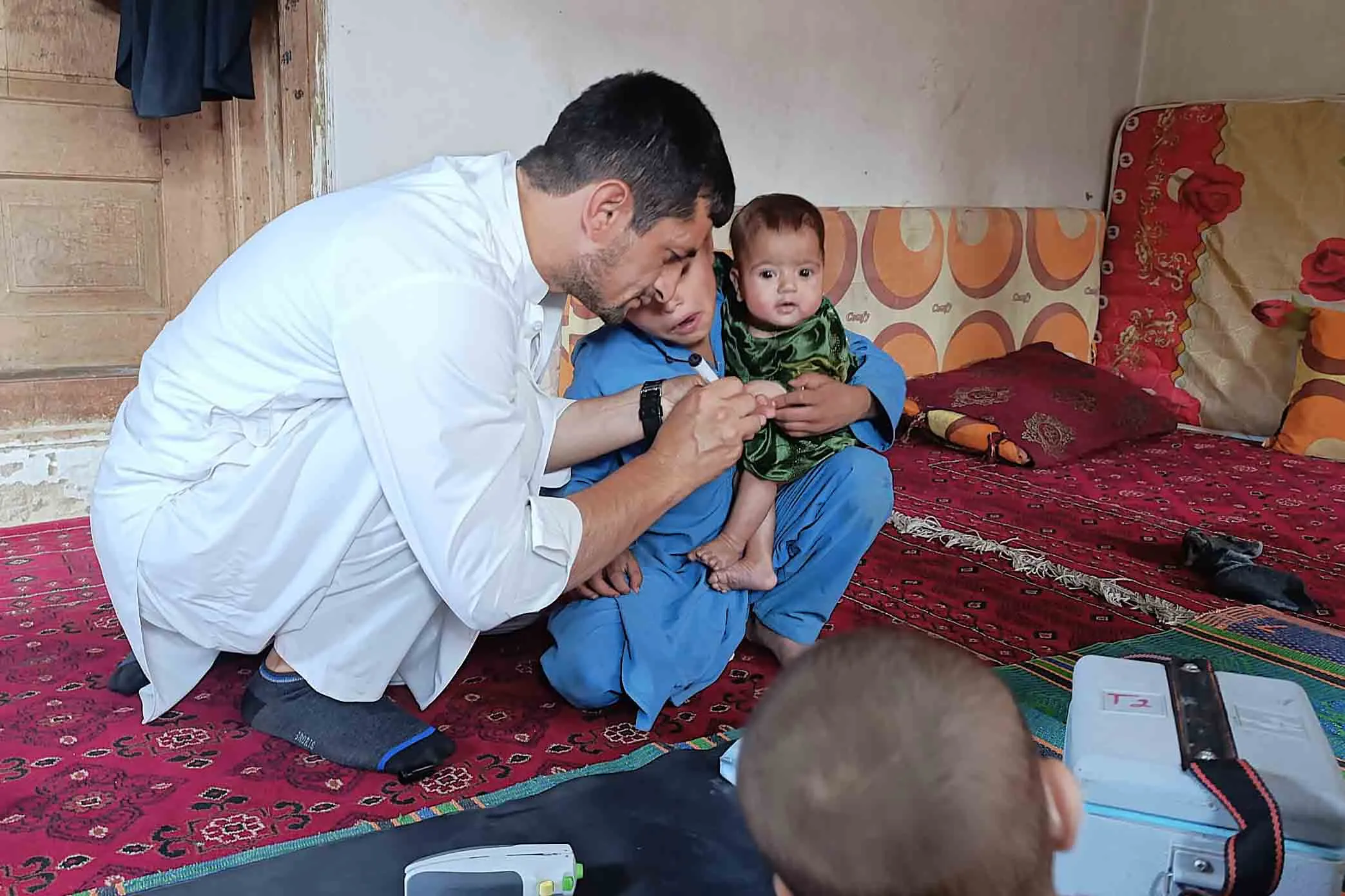 © Polio Free Afghanistan | 2026
Wasiullah marks a child's finger after vaccination in Kamdesh District.
Step by step with the teams
Every polio vaccination campaign involves more than the moment a vaccinator reaches a child's door. Coordinating the teams, assessing local conditions, and continuously monitoring the work are just as essential.
Wasiullah starts his workday by coordinating with the teams and reviewing their plans. Then he heads into the field, closely monitors their activities, and works with them to solve any problems they encounter.
"Our day starts with coordinating with the teams, reviewing the area plan, and assessing needs. Then we go out into the field and monitor the teams' work," he says.
In Kamdesh, daily work is closely linked to the area’s geography and road conditions. Some families live in remote areas, and because of the difficult terrain, teams can't always reach every family in a single day.
“Our area has difficult roads and homes are scattered far apart. Sometimes the teams can't reach every family in a single day, but we work to make sure that by the end of the campaign, no child is left unvaccinated," Wasiullah says.
Trust begins with conversation
Questions and concerns from some families about the polio vaccine are an important part of Wasiullah's work. He believes the way to convince such families is to listen to them patiently first, and then give them simple, clear information about polio and the vaccine.
"When people have questions or concerns, we try to listen to them first, then give them information respectfully and in simple language."
According to him, some concerns come from what people hear from others. In those cases, he and the teams try to answer families' questions patiently and, when needed, ask trusted health workers and religious figures for help.
"When someone has a question, we try to provide explanations through trusted health and religious figures. In my view, respect and good communication are very important in building people’s trust," he says.
Enayat Rahman, a local elder, says Wasiullah understands people's circumstances well and, even in difficult field conditions, works to make sure children's health is looked after.
“Wasiullah understands the situation of our people. He works with the teams even under challenging conditions and strives to ensure that children’s health is protected,” he says.
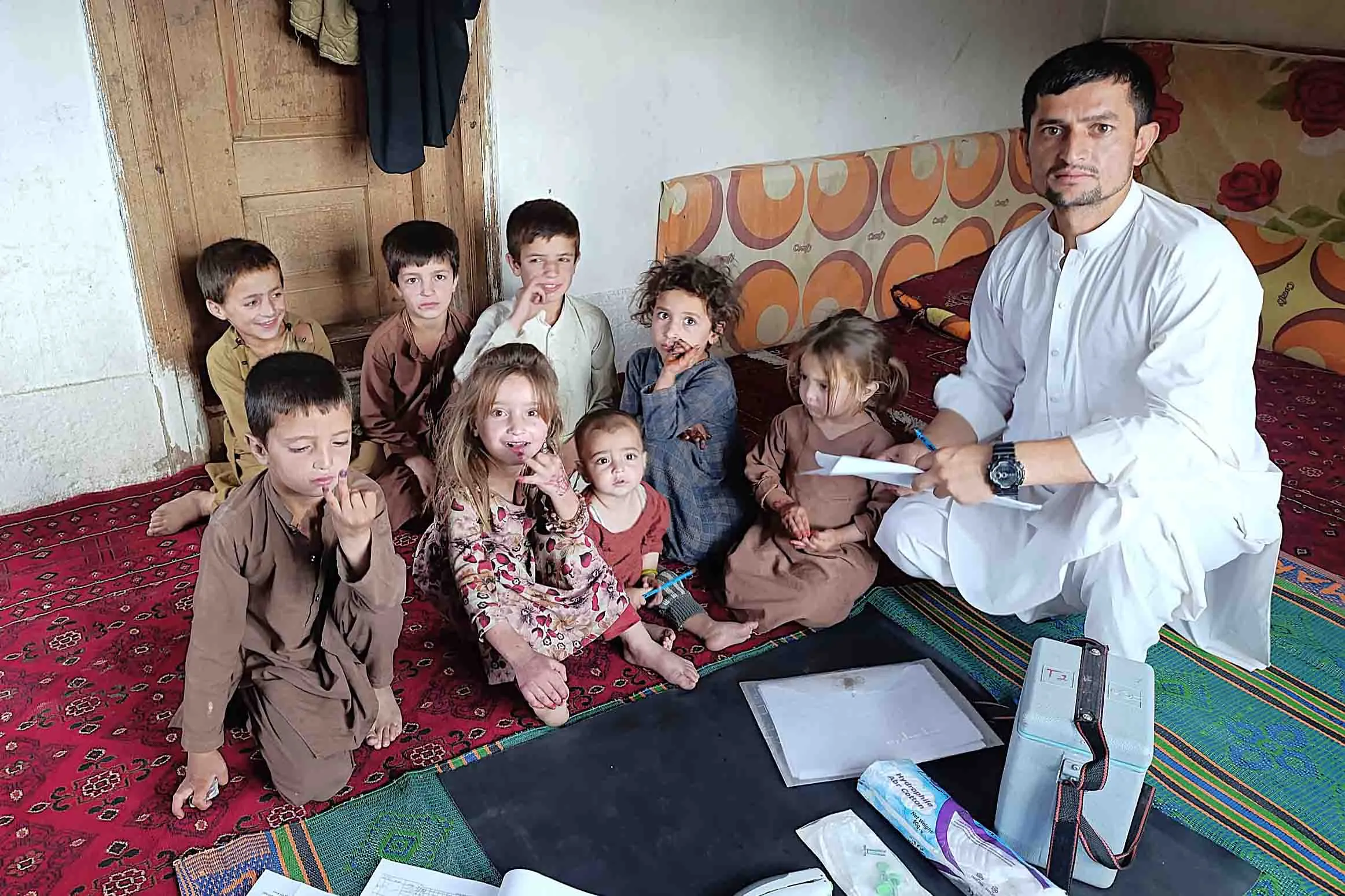 © Polio Free Afghanistan | 2026
Wasiullah in Nuristan with children who have received the polio vaccine.
When trust turns into action
Over the past five years, Wasiullah has talked with many families about polio vaccination. In his experience, changing a family's mind doesn't always happen in a single conversation; sometimes it takes patience, explanation, and the help of trusted people.
He recalls one family that was initially worried about vaccinating their children. Wasiullah and the vaccination team took time to listen to the family’s questions, provided the information they needed, and, when necessary, sought help from local elders and health workers. Eventually, the family had their children vaccinated.
For Wasiullah, that moment meant more than finishing a task at work.
"It makes me very happy. When a family has their child vaccinated after we talk, I feel I've played my part in protecting that child's health. That feeling motivates me to keep going."
Five years, one change
Wasiullah says he has seen a change in families’ attitudes over the past five years. More families now understand the value of the polio vaccine, he says, and have their children vaccinated during campaigns.
"Most families now understand that they should vaccinate their children in every campaign. There are still some who have questions and concerns, though, and they need to be convinced patiently."
He credits the joint efforts of community elders, religious scholars, health workers, and vaccination teams with playing an important role in strengthening people's trust.
One hope, for every child
Wasiullah's greatest hope is that Afghanistan will one day be completely free of the poliovirus and that no child will be denied a healthy future because of this disease.
"I hope all children grow up healthy and protected from disease. I want children in our remote areas to have access to health services just like children in the cities."
He says a polio-free Afghanistan will be the shared achievement of everyone who has helped vaccinate children, from families and community leaders to religious scholars, health workers, and vaccination teams.
Wasiullah continues his work, striving to make sure the vaccine reaches children in even the area's most remote households.
His hope is simple: no child should be denied a healthy future because of polio.