Reaching every child: Monsa Hakimi’s fight against polio
Monsa Hakimi works alongside her team to ensure that every child receives the polio vaccine. She speaks with families about health and helps build awareness and trust, contributing to a safer and healthier future for children.
Panjshir, Afghanistan - In the mountainous areas of Shutul district, homes are scattered far apart, and some roads are long and difficult. But none of that stops Monsa Hakimi.
During every polio vaccination campaign, she travels from site to site, making sure every child is reached and none are missed.
Monsa, 26, is a trained midwife. She also grew up in the same area, so she knows the people, their lives, and their daily struggles well.
Today, she works on polio vaccination campaigns. Vaccinating children, recording their information, answering families’ questions, and raising awareness about health are all part of her daily work.
"I'm happy to serve my community," Monsa says. "Every day, I have the chance to do something for children's health."
Beyond the vaccine: talking about health
When Monsa visits a home to vaccinate children, she doesn't stop there, she looks at the health needs of the whole family and shares whatever guidance they need.
Drawing on her midwifery training, she talks with mothers about their own health and encourages them to visit nearby health centers for the TD vaccine, which protects against tetanus and diphtheria.
“A child’s health cannot be separated from the health of the family. A mother’s health is also important for her child and the whole household,” Monsa says.
For Monsa, every household visit is an opportunity to connect the entire family with essential health information and services.
 © Polio Free Afghanistan | 2026
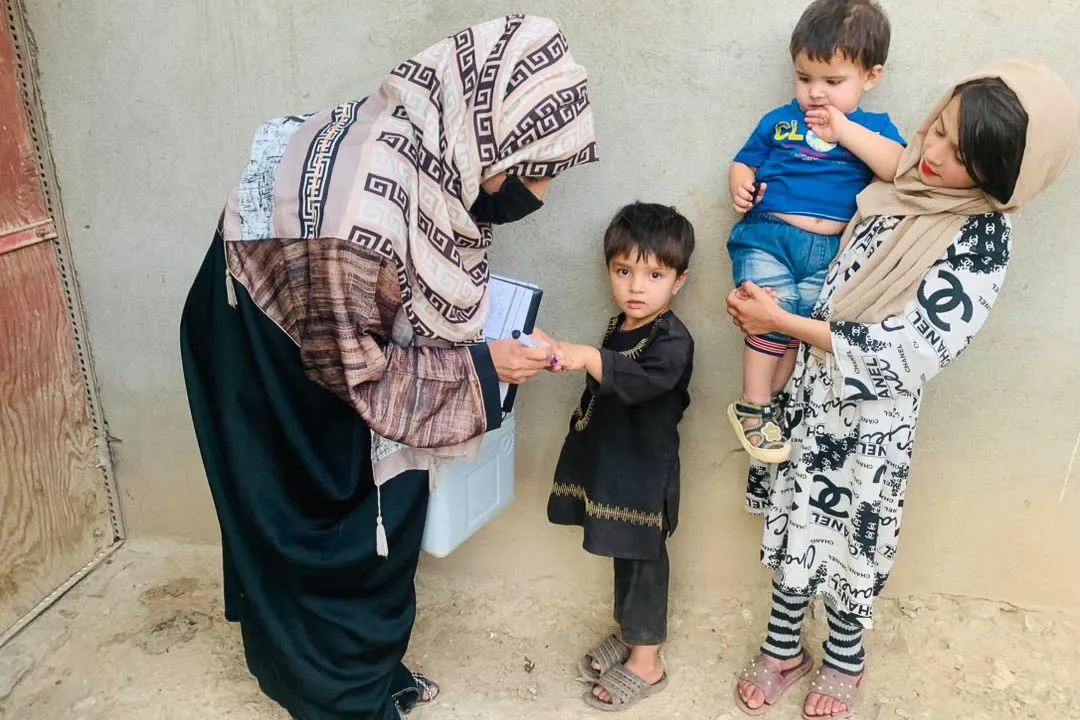
Monsa Hakimi marks a child's finger after vaccination in Shutul district, Panjshir, as the child's older sister holds her younger brother.
When some families refuse vaccination
A key part of Monsa’s work is speaking with families who have concerns about vaccination.
Some families, misled by misinformation and rumors, don't allow their children to receive the polio vaccine. In such situations, she and her team first try to understand the family's concerns, then respond with accurate information about the vaccine.
"When a family refuses the vaccine, we first try to understand the reason behind their opposition," she says. "Then we give them accurate information and answer their questions. Our goal isn't to force anyone, it's to raise awareness and build trust."
She recalls one family that initially refused to vaccinate their child because of misinformation.
She and her team spoke with the family patiently, answered their questions, and explained the importance of the vaccine. Eventually, the family was convinced and had their child vaccinated.
That experience proved to Monsa that respect, patience, and speaking to people in plain language play a key role in building trust.
Reaching every child
Monsa’s workday begins after she receives her field instructions. She and her team head to designated areas, vaccinate children, record information, and answer families' questions.
According to Monsa, she vaccinates 80 to 100 children on a typical day. In recent campaigns, she has vaccinated around 600 children in her area and reached nearly 150 families.
Polio is a contagious disease that can cause permanent paralysis in children, but it can be prevented through vaccination. Afghanistan remains one of only two countries in the world where wild poliovirus continues to pose a threat to children. As of August 26, 2026, 19 cases of wild poliovirus have been reported in Afghanistan.
As part of these efforts, Monsa and her colleagues travel from site to site in remote areas to ensure that no child is missed.
“These few drops of vaccine may seem small, but they hold tremendous value for a child’s future,” Monsa says.
 © Polio Free Afghanistan | 2026
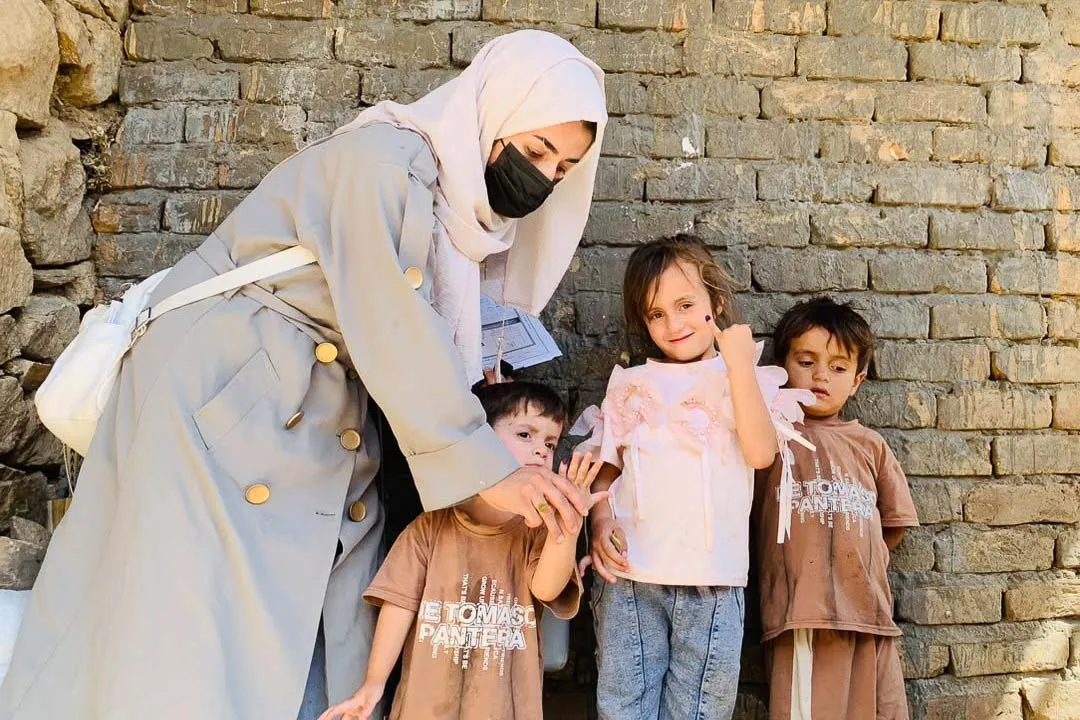
Monsa Hakimi with vaccinated children in Shutul District.
When trust brings change
Over time, Monsa says, she's seen a positive shift in awareness among people in her area.
Families who once refused to vaccinate their children because of misinformation now cooperate closely with vaccinators. Some families even look forward to upcoming campaigns so they can get their children vaccinated.
Monsa believes that support from religious scholars, tribal elders, and respected community elders also plays an important role in building people's trust. Trusted figures within a community can help health workers deliver accurate information about the vaccine.
She adds that since starting this work, she has developed an even stronger sense of responsibility for the health of her community.
A polio-free Afghanistan: Monsa's hope
Monsa has a simple but powerful hope for Afghanistan's children.
“I want all children in Afghanistan to grow up healthy and protected from preventable diseases. They should be able to go to school and build a better future for themselves and their country.”
For her, a polio-free Afghanistan isn't just the eradication of one disease, it's the success of a shared effort by vaccinators, health workers, volunteers, and families alike.
In Shutul, Monsa spends her days traveling from one place to another, vaccinating children along the way. For her, every vaccinated child is one step closer to a safer future.
She hopes that these small steps will one day lead Afghanistan toward a polio-free future.