The memory that became a promise to protect children
The experience of a young girl’s paralysis inspired Naseebullah Hussainkhel to join the fight against polio and protect other children from the same fate.
Kabul, Afghanistan – Every time Naseebullah Hussainkhel walks the streets of Kabul’s Ninth District, vaccinating children against polio, he is reminded of a memory from years ago that changed the course of his life.
It is the memory of a three-year-old relative who once played freely with other children, enjoying an ordinary childhood, until polio suddenly stole her ability to move.
“I will never forget those moments when other children were playing while she sat there, only watching,” Naseebullah says. “That was when I realized that polio does not only harm one child but can bring lasting pain and suffering to the entire family.”
That painful experience became a turning point in his life.
Twenty-eight-year-old Naseebullah Hussainkhel lives in Kabul’s Ninth District, where he was born and raised. He completed his education up to grade 12 and has been working as a vaccinator in polio vaccination campaigns for the past three years.
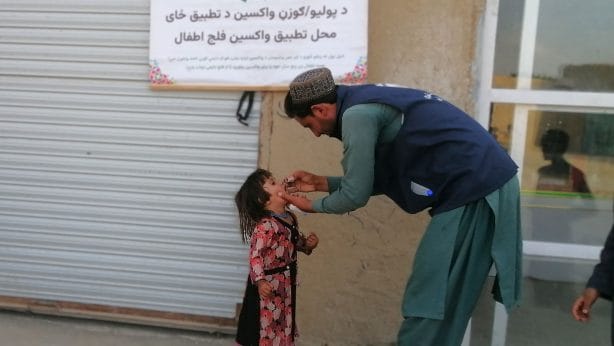
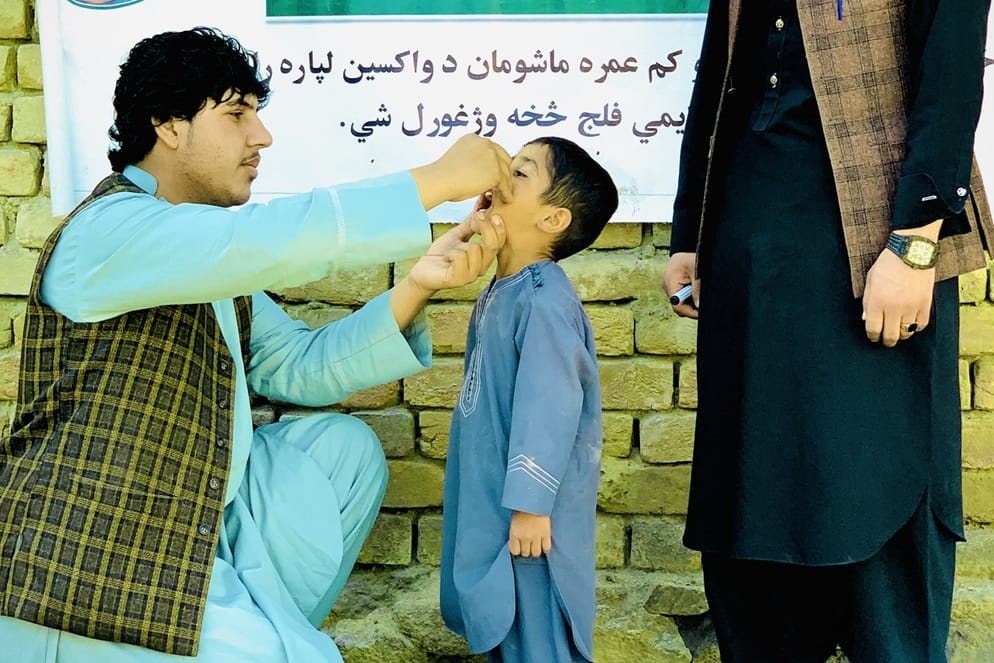 Naseebullah Hussainkhel administers the polio vaccine to a child in Kabul’s Ninth District. For the past three years, he has been working to protect children from polio. © Polio Free Afghanistan / 2026
Naseebullah says that starting work as a vaccinator was not just a job, it was the result of the feelings that arose in him after witnessing the young girl’s condition.
“When I saw how polio could change a child’s life, I made a personal commitment to do my part as a member of the community to help prevent it. I did not want other children to face the same fate,” he says.
But the path was not easy for Naseebullah. He quickly realized that fighting polio is not just about vaccinating children, earning the trust of families is an equally important part of the work.
He says that in the early days, he often encountered families who were hesitant to vaccinate their children because of misinformation or concerns.
In such situations, Naseebullah explains, the most important thing was to first listen to people, understand their worries, and then clearly explain the importance of vaccination.
But his most powerful tool for convincing families was the experience he had witnessed firsthand.
Whenever a family was reluctant to vaccinate their children, he would share the story of the young girl affected by polio. Sometimes he would even show them her photos, helping them understand how polio can change a child’s life.
He says that during his three years of work, he has convinced many families and encouraged them to vaccinate their children and protect them from polio.
Naseebullah considers this one of his greatest achievements and adds, “When a family is convinced and vaccinates their child, I feel that my efforts have contributed to a healthier future for that child.”
He says that compared to the past, he now sees a positive change in people’s attitudes in his community. Today, many families understand the value of vaccines and cooperate to protect their children.
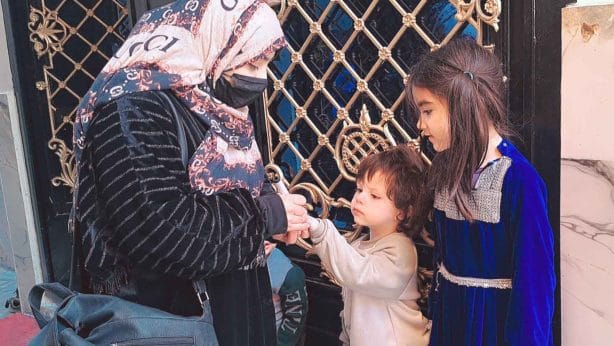
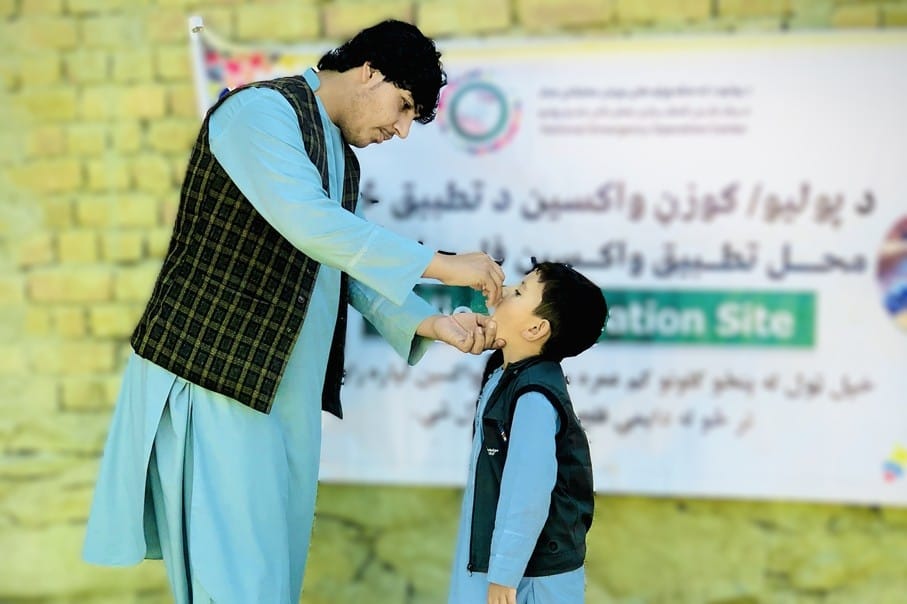
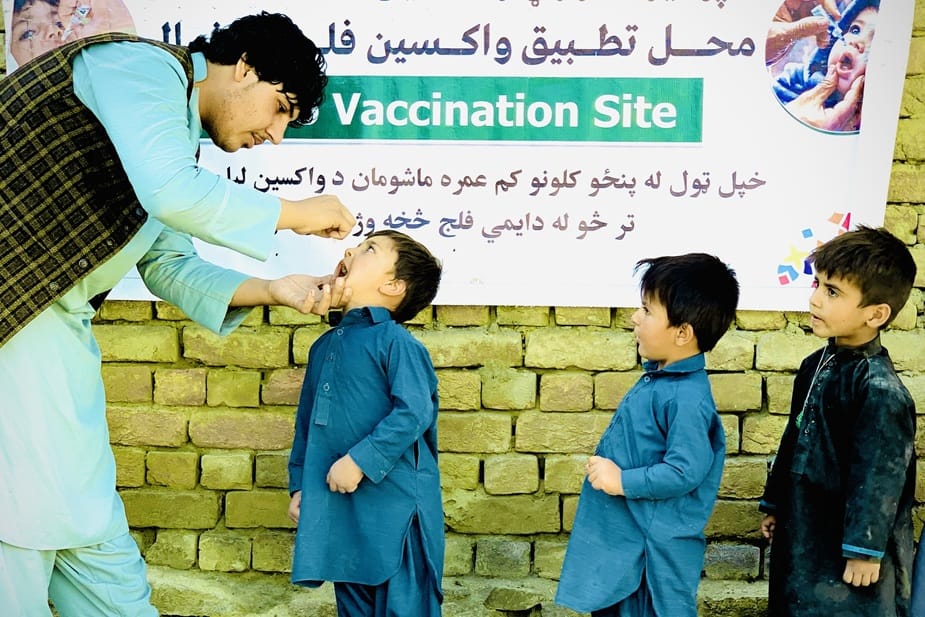 Naseebullah Hussainkhel administers polio vaccines to children in Kabul’s Ninth District. He believes that every vaccinated child is one step closer to a healthy future. © Polio Free Afghanistan / 2026
Naemat Totakhel, a resident of Kabul’s Ninth District and a former journalist, also says that public awareness about vaccination has increased, and that the efforts of health workers have played an important role in this progress.
“People now understand far better than before how important vaccines are for the health and future of their children,” he says.
Mohammad Mustafa, a religious scholar from the same area, considers the fight against polio a shared responsibility. “Protecting children is not only the work of polio vaccination campaign volunteers, it is the responsibility of every member of society because our religion places special value on preserving human life and health,” he says.
Naseebullah hopes to see the day when Afghanistan is free from the poliovirus and no child loses the chance to pursue their dreams because of the disease.
“My greatest hope is that no mother or father ever has to fear their child becoming paralyzed. I want every child to be healthy, to play, to learn and to pursue their dreams,” he says.
The pain that Naseebullah witnessed up close in the life of a child affected by polio years ago has now become the driving force behind his efforts to protect children. He believes that every drop of the polio vaccine can protect a child from the same painful fate and give them the opportunity to live a healthy life, get an education and build a brighter future.