The Value of Two Drops
The story of a girl who paid a high price for a small neglect
Kabul, Afghanistan – The morning light has not fully broken yet, but the streets of Kabul are already alive with noise and movement. People hurry to their daily work, long lines of vehicles stretch one after another, and the rhythm of city life unfolds as usual.
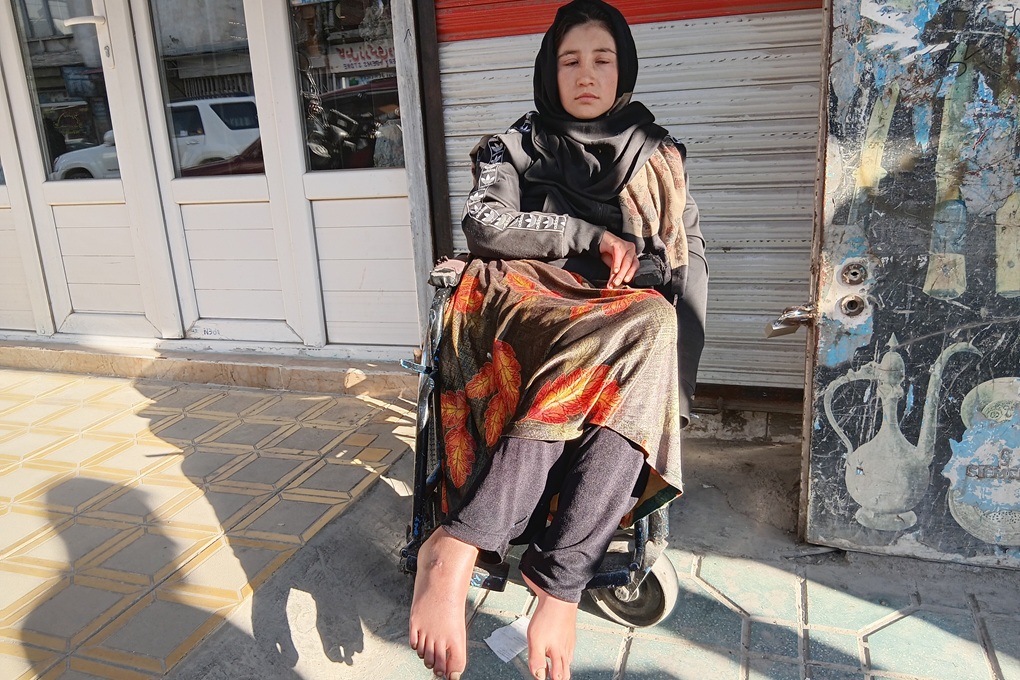
Amid this bustle, by the roadside, a young girl sits in her wheelchair silent yet carrying a story of profound depth.
Eleven-year-old Raihana represents a quiet pain hidden behind the noise of the city. Her eyes move from the faces of passersby to the children walking past, children with schoolbags on their shoulders, making their way to school.
In a soft voice, she says, “When I see them, it makes me happy… but then a pain rises in my heart, wishing that I, too, could have gone to school.”
Raihana was only three years old when she contracted the poliovirus. At first, her family did not understand what was wrong. But when they took her to the hospital, the truth quickly became clear – polio. A disease with no cure, one that can change a child’s life forever.
The consequences of the disease were severe: one of Raihana’s arms and one of her legs were paralyzed.
 Raihana, in the heart of the city, yet far from her dreams. © Polio Free Afghanistan / 2026
Recalling her father’s words, she says, “It was a very difficult moment when the doctors told us that our daughter would no longer be able to move properly.”
From that moment on, Raihana’s life changed forever. School, play, and friends, all the things that are a natural part of childhood, were left out of her reach. Now, many of her daily activities depend on the help of others.
But the heaviest burden is not just physical limitation. It is the feeling of being incomplete.
“When I have to rely on others for my daily needs,” she says, “I feel as though I have lost a part of myself.”
Throughout the day, Raihana spends much of her time by the roadside. Some people stop to help her, while others pass by. But her thoughts are often elsewhere – in a classroom, among books, following a lesson.
“I wish that one day I could study and go to school,” she says.
Raihana’s father, Taj Mohammad, the sole breadwinner of the family, sells vegetables in Kabul’s markets every day. Despite the pressure of work and the exhaustion of long days, it is his daughter’s condition that troubles him most.
“I was careless at the time,” he says. “I did not realize how valuable those two drops of vaccine were.”
“If I had vaccinated my daughter, her life would be different today,” he adds, his voice heavy with regret.
He now turns his mistake into a message for others. “I tell all mothers and fathers: these are just two drops, but they can save a child’s future. Do not let your child face the same fate as my daughter.”
 Seated in her wheelchair, Raihana lives with limitations yet remains hopeful for the future. © Polio Free Afghanistan / 2026
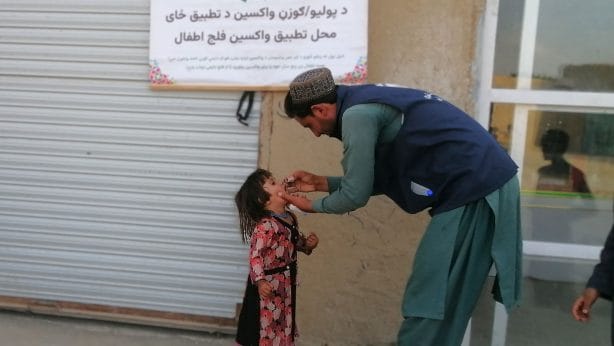
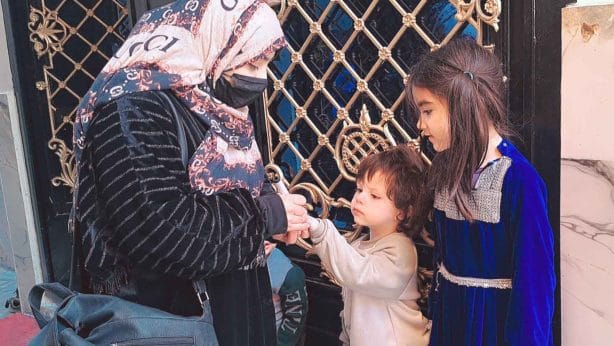
According to health experts, polio remains a serious threat to children’s lives, but its prevention is simple: timely vaccination. This vaccine not only protects a child from the disease but also gives them the chance to live a normal and active life.
At the same time, social activist Sayed Mohammad Kamran believes that Raihana’s story is not just a personal tragedy of one family.
He says, “It is a test of our collective conscience. If we leave children like her behind, we are leaving our own future behind.”
Kamran emphasizes that supporting children like her, whether through education or by creating opportunities for work, can transform their lives.
“If Raihana receives support and is able to study, she can become an inspiration to others. Her success will not be hers alone, but a success for the entire community,” he adds.
As evening falls and the sun slowly sets, the noise of the city begins to fade. But Raihana remains in her place, her eyes still fixed on the children passing by.
In a soft yet hopeful voice, she says, “I hope no other child becomes like me.”
Her simple words reflect a powerful truth, that polio is preventable, but only if every child under the age of five receives these two drops during each campaign.
Amid the bustle of Kabul, Raihana’s story reminds us that sometimes the smallest actions, like two drops of vaccine, can create the biggest change.