The fight against polio in the valleys of Dawlat Shah; Hamid’s 13-year struggle
Laghman, Afghanistan – It is five o’clock in the morning. The sun has not yet risen behind the towering mountains of Dawlat Shah district in Laghman, but 27-year-old Hamid has already gathered his essential supplies and is on his way to the Khwaja Khando Noya area.
Here, nature, alongside all its beauty, is also a harsh test. The paths are winding, and the distances between villages are long, often requiring hours of walking.
Hamid, who knows every inch of this area, says, catching his breath: “When I think that this journey of mine can prevent a child from becoming paralyzed, I do not feel tired.”
More than a decade of experience
Hamid is not just a worker; he is part of Dawlat Shah district’s health history.
He began this work 13 years ago, when he had just stepped into early youth. For four years, he worked as a volunteer in polio vaccination campaigns, delivering vaccines to children in his area under all kinds of conditions. Today, as he leads the second section and eighth cluster as a supervisor, he brings with him years of experience.
Recalling his early experiences, he says: “I was still a young boy when I understood the meaning of a social tragedy, a tragedy caused by the poliovirus. When I saw the signs of helplessness in the bodies of children in my village, I realized how heavy the price of negligence can be. I told myself that from then on, I must prioritize children’s health. Today, I stand here to fulfill that promise, so that no other child ever experiences the paralysis of their limbs because of polio.”
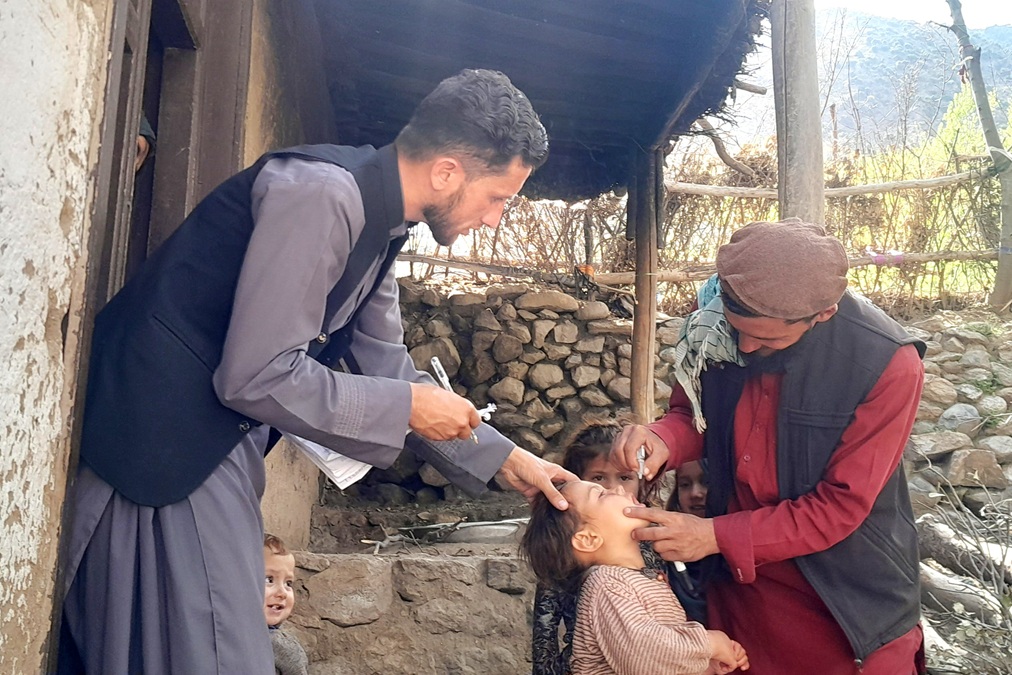
 The vaccination process continues in the field; the team simultaneously attends to registering children and ensuring complete coverage. © Polio Free Afghanistan / 2026
The supervisor’s role: from oversight to support
Hamid’s job is not just to sit in an office; during every polio vaccination campaign, he serves as a guide. His responsibilities span from the village of Domoray Noya to the Harwesh Yak Valley.
He must ensure that the vaccine is kept at the correct temperature, that teams reach their assigned areas on time, and, most importantly, that every child receives the vaccine.
“My role as a supervisor is not just to fill out reports,” Hamid says. “I want to be out in the field alongside my teams. When a volunteer gets tired or faces a resistant family, I am there to help. We all work as one team.”
Combating misconceptions: a victory of patience and reason
In areas where awareness levels are low, misinformation and rumors about the polio vaccine stand like a wall before health workers.
Hamid has faced many such situations. He recalls one incident: “Once, I came across a family that refused to vaccinate their child because of a false rumor. They believed that the vaccine would harm their child’s future. My team and I spent about an hour speaking with the elders of the family. I explained the value of vaccination in light of Islamic guidance and medical evidence. When the father was finally convinced and brought his child for vaccination, I felt as though I had won a battle.”
He emphasizes that in such situations, “a gentle language, patience, and mutual respect” are our strongest tools.
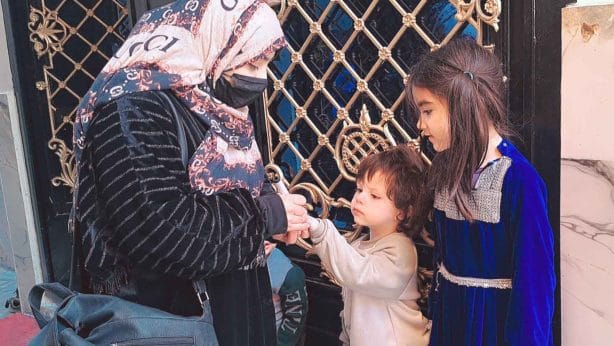
 After vaccination, the child’s finger is marked. © Polio Free Afghanistan / 2026
Steps toward success: a shift in public perception
Years of continuous effort have now begun to bear fruit. Hamid says with satisfaction that public trust has increased significantly compared to the past.
Today, parents in the villages of Dawlat Shah ask for vaccination teams themselves. This change is the result of the efforts of thousands of individuals like Hamid, who have worked to build trust within their communities.
For Hamid, the greatest reward is the marker ink that remains on children’s fingernails at the end of the campaign.
“At the end of the day, when I see that all the children have been vaccinated and protected from the threat of polio, all my exhaustion disappears. That is my greatest joy.”
Hope for the future
Hamid is still young and wants to continue his work until Afghanistan is no longer one of the two countries in the world where polio still exists.
He believes that if every member of society plays their part, the dark shadow of polio will be lifted from the heads of Afghan children forever.
As Hamid continues stepping toward his goal, he closes with these words: “Our children have the right to walk on their own feet, go to school, and take part in building their country. I am here to defend that right. Polio will be defeated because our resolve in this fight is strong.”