A lasting commitment to a safer future for children
A health worker’s mission in the mountainous areas of Nuristan: keeping every child safe from polio
Nuristan, Afghanistan – In a remote village in Kamdesh district, the door of a house had been shut in Mohammad Anas’s face several times. Each time, the family elder told him that the children were healthy and didn’t need the vaccine.
Mohammad Anas did not give up. He knew that a child who missed the vaccine and contracted polio could be paralyzed for life, a paralysis with no cure, one that would affect the child, the family, and the community alike.
This conviction gave him the strength to keep going back, speak with the family again, and convince them to vaccinate their children.
Twenty-four-year-old Mohammad Anas is a resident of Kamdesh district in Nuristan and works in polio surveillance during vaccination campaigns.
He has studied medical technology, but believes his education only gains value when used to improve people’s lives.
“I wanted to serve the children of my community and play my part in protecting their future,” he says. “Polio is a preventable disease, and the vaccine protects children from lifelong paralysis.”
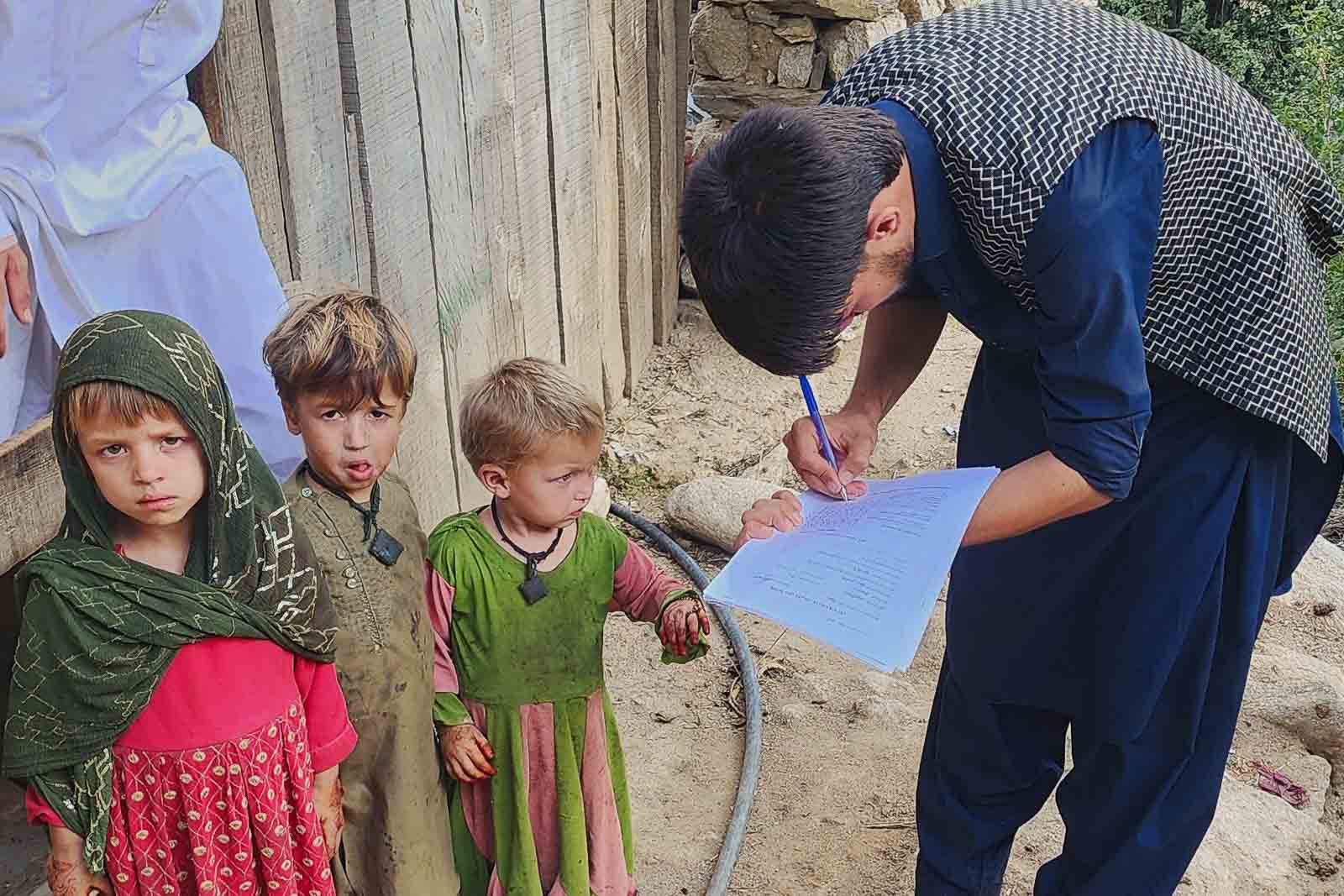 © Polio Free Afghanistan | 2026
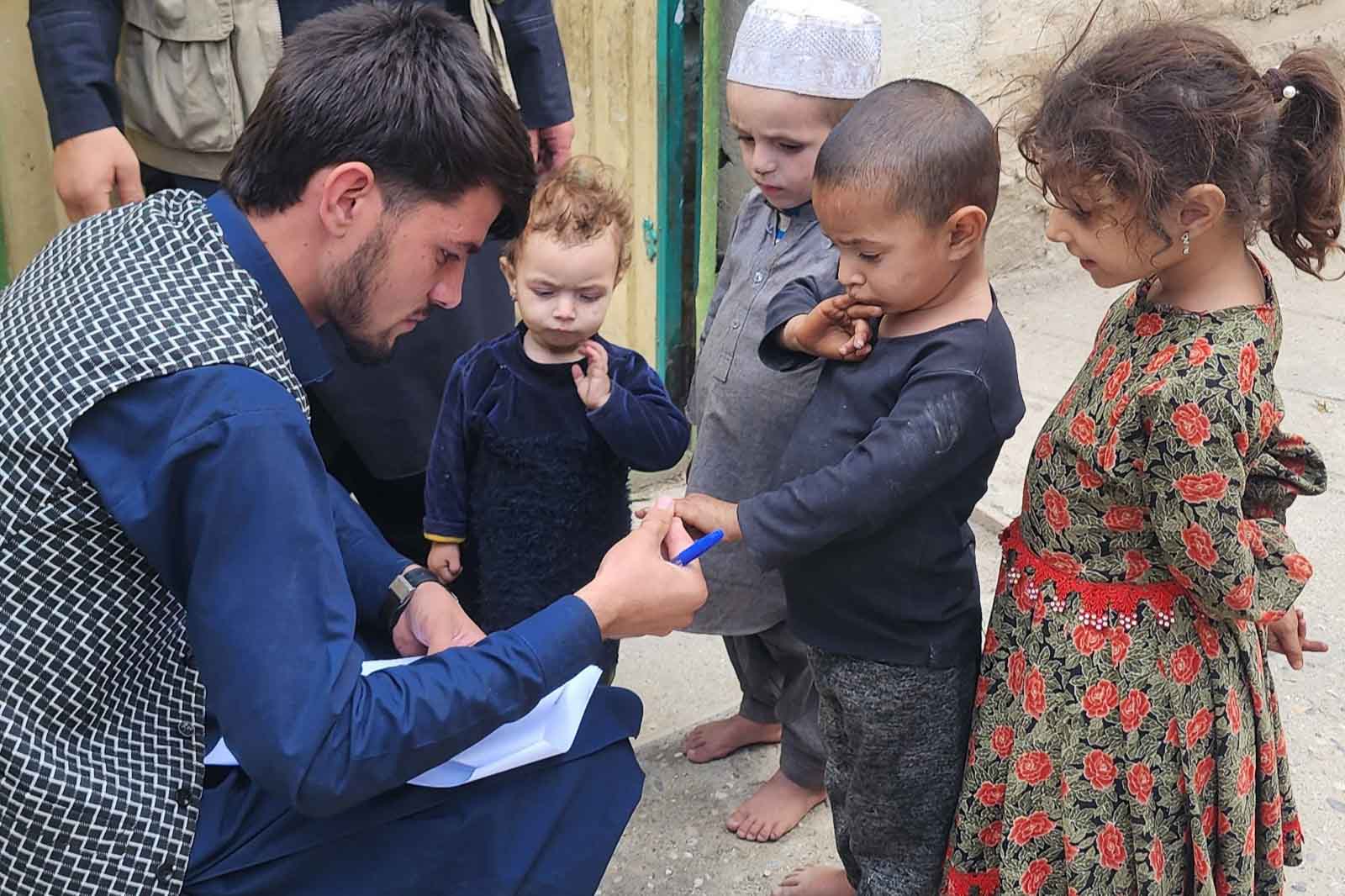
Mohammad Anas records information about a child’s vaccination status in Kamdesh district, Nuristan.
During polio vaccination campaigns, his day begins before sunrise. He reviews the day’s plan with the team, then heads to mountainous and remote areas, monitors vaccination activities, and talks with families about polio and the vaccine.
His work is not limited to supervising vaccination activities; he also answers the questions of parents who want to make informed decisions about their children’s health.
Delivering polio vaccines to children in Nuristan is never easy. Mountainous terrain, long journeys, and sudden weather changes present numerous challenges for health teams. Some villages take hours to reach, but Mohammad Anas says these obstacles are not the most difficult part of their work. The greatest challenge is convincing families who still have concerns about vaccination.
“When a family refuses to vaccinate their children, we listen to them first,” he says. “People trust you once they feel their concerns have been respected.”
He saw the impact of this approach firsthand in the story of Momin Khan’s family.
For years, this family had not vaccinated their children, having fallen under the influence of misinformation and rumors about the polio vaccine. Mohammad Anas visited them several times, but he didn’t rush to convince them. Instead, he first listened to their concerns, then explained the risks of polio and the safety of the vaccine in simple language.
When he saw their concerns hadn’t eased, he brought them a message from a religious scholar the family trusted. That same day, the family changed their position and vaccinated their children.
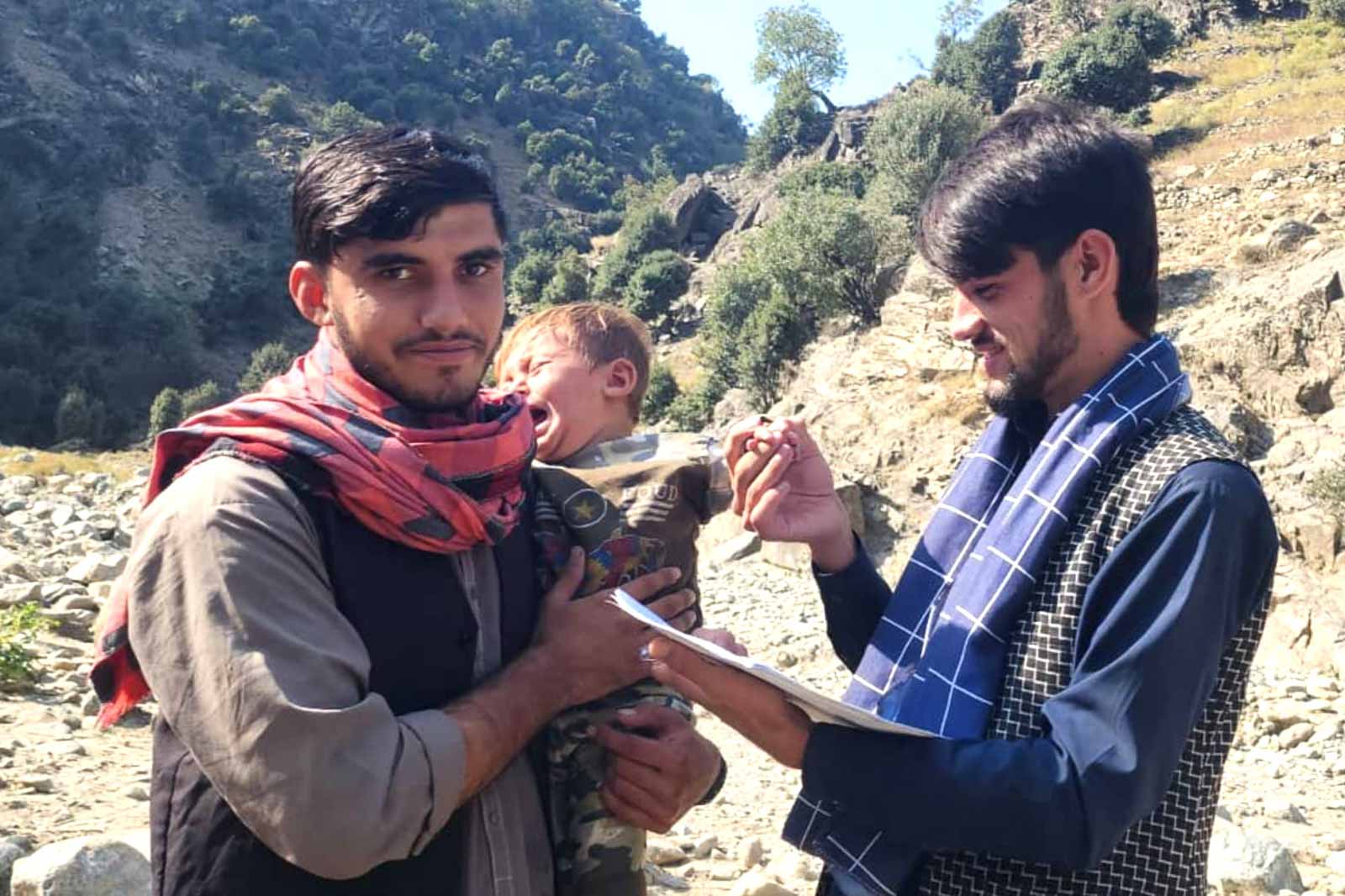 © Polio Free Afghanistan | 2026
Mohammad Anas talks with a father in Kamdesh district, Nuristan, about his child’s vaccination status and records the relevant information, each visit aimed at ensuring no child is left without the polio vaccine.
For Mohammad Anas, this wasn’t just one family’s consent, It meant the future safety of several children.
He believes that the fight against polio is not the responsibility of health workers alone. Community leaders, religious scholars, and trusted members of society can play an important role in sharing accurate information and building families’ confidence in vaccination.
According to him, people’s attitudes have changed significantly in recent years. Families that once refused the vaccine now bring their children to be vaccinated during campaigns. He says this change is the result of continued awareness efforts, the tireless work of health workers, and the support of community leaders.
Working in the polio program has also changed Mohammad Anas’s outlook on life. He says that working with communities taught him that people’s concerns need to be heard, because most families vaccinate their children once they have accurate information.
He began his work as a volunteer and now continues it as a coordinator, carrying the same sense of responsibility and commitment for children’s health.
His family also supports his work and takes pride in his efforts to protect children’s health. That support gives him the motivation to carry on despite every obstacle.
Mohammad Anas has one request for all mothers and fathers: don’t delay vaccinating your children.
“Polio has no cure, but it is preventable,” he says. “A few drops of the vaccine can save a child from a lifetime of paralysis.”
His hope is that one day, no Afghan child will face the threat of permanent disability from polio, and that Afghanistan will stand among the nations that have eliminated the disease.
For Mohammad Anas, that day will be the most beautiful reward for years of exhaustion, long journeys, and tireless effort.