From first steps to greater responsibility: Janat Gul’s mission to protect children
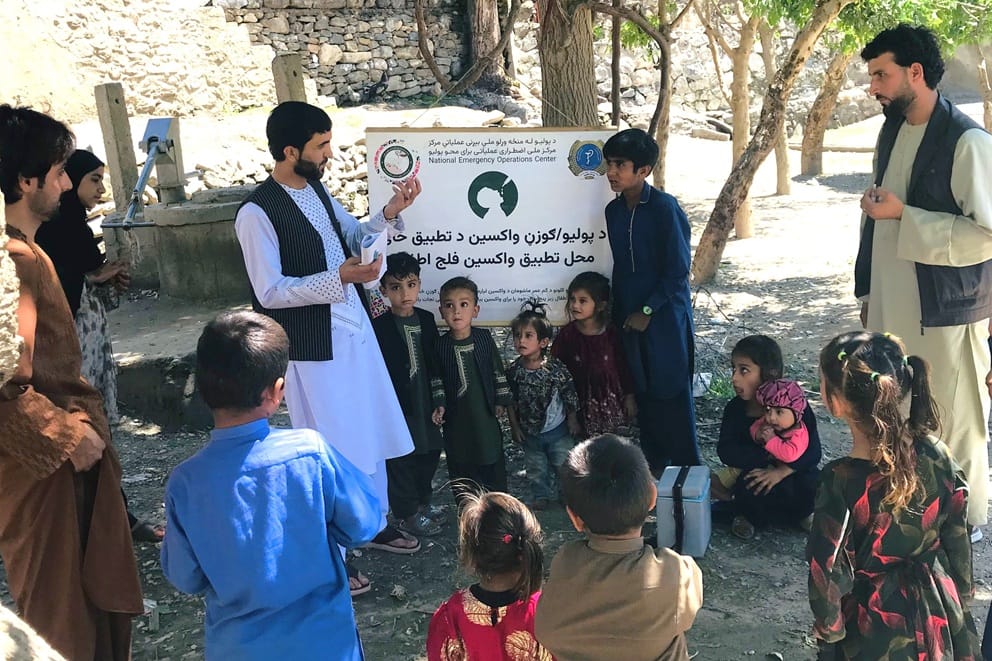
Janat Gul Ehsas began his fight against polio as a volunteer. Today, as a coordinator, he works to ensure that every child has access to vaccination by supporting frontline teams and fostering collaboration with communities.
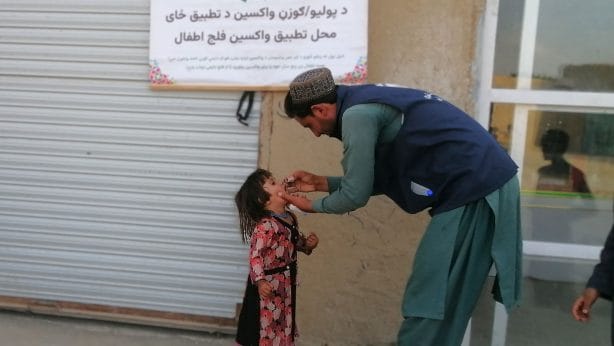
Kunar, Afghanistan – When Janat Gul Ehsas first joined the fight against polio several years ago, he served as a volunteer during vaccination campaigns. His role was to reach his assigned communities, vaccinate children, and raise awareness among families about the importance of preventing polio.
He spent his days walking through the streets of Asadabad’s first district, meeting with families, answering their questions, and working to ensure that no child was missed during vaccination campaigns.
What began as a modest role, however, gradually evolved into a much greater responsibility. Those early steps marked the beginning of a journey that would eventually see Janat Gul transition from a volunteer to a coordinator, helping to support vaccination teams and polio eradication efforts in his community.
Now 31, Janat Gul Ehsas is a resident of Asadabad’s first district, in the capital of Kunar province. He also holds a bachelor’s degree in Pashto Literature.
Although Janat Gul had studied Pashto Literature, when he saw that polio was threatening the health and future of children, he decided to play his part in efforts to prevent the disease.
“I joined the polio programme because of that sense of responsibility,” Janat Gul says. “I wanted to do my part to help ensure that children remain protected from polio and have the opportunity to grow up healthy.”
His time as a volunteer, and the daily interactions he had with families, provided valuable experience that would later prepare him to take on greater responsibilities.
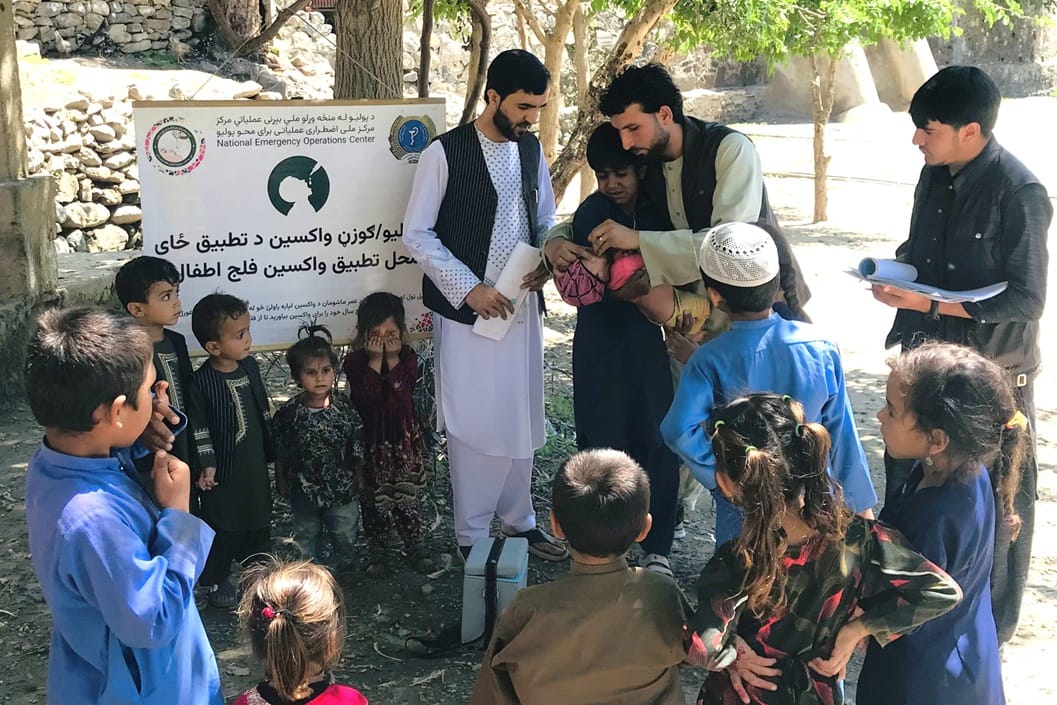 Janat Gul Ehsas monitors the polio vaccination process to ensure that every child is protected against polio. © Polio Free Afghanistan / 2026
He says his work in the field taught him that delivering vaccines alone is not enough for a successful health initiative; understanding people’s perspectives, concerns, and needs is equally important.
Over time, because of his experience and commitment, Janat Gul first took on the responsibility of supervising teams and now serves as the polio coordinator for Asadabad’s first district.
Today, his daily responsibilities have expanded significantly.
While he once spoke directly with families himself, he now coordinates vaccination teams, monitors campaign activities, helps field teams address challenges, and maintains strong connections with the community to help ensure that every child receives the vaccine.
With greater responsibility, however, new experiences and challenges have come.
Janat Gul says that situations sometimes arise during vaccination campaigns that cannot be resolved through the efforts of health teams alone. Instead, they require the support of trusted members of the community.
For this reason, he considers the involvement of community elders and religious leaders essential to protect children and ensure that they receive the polio vaccine.
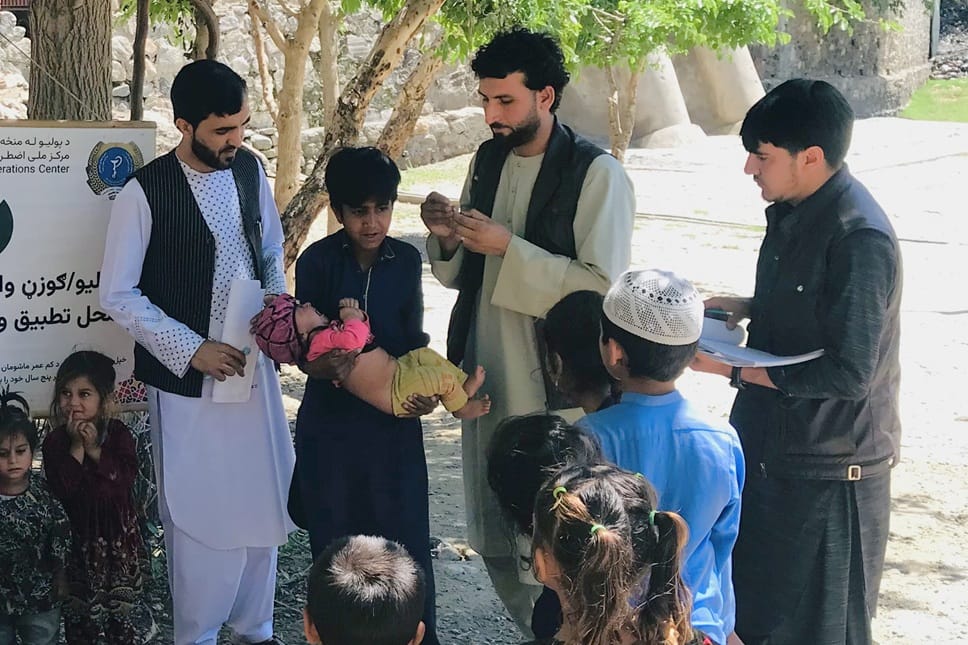 Janat Gul Ehsas supports field teams in their efforts to protect children during a polio vaccination campaign in Asadabad city, Kunar province. © Polio Free Afghanistan / 2026
Qazi Najibullah, a religious scholar in Asadabad, is among those who speak with families about vaccination and help promote messages on protecting children’s health.
According to Janat Gul, the support of trusted community members plays an important role in strengthening relationships between families and health workers.
He recalls an experience from his work that highlighted the value of collaboration.
“Once, a family had concerns about vaccinating their child. We first listened to their concerns and then, with the support of Qazi Najibullah, spoke with them about the vaccine. Eventually, they felt reassured and agreed to have their child vaccinated.”
For Janat Gul, such experiences show that trust is built through dialogue, respect, and working together with communities.
Long days and field responsibilities during vaccination campaigns sometimes affect his personal life as well.
He says his work occasionally keeps him away from his family, but their support has been essential in helping him continue his mission.
“When I know that a child has been protected from the risk of polio, it makes all the challenges and efforts worthwhile,” he says.
Janat Gul does not consider his journey from volunteer to coordinator to be his greatest achievement. Instead, he believes his real success lies in helping strengthen collaboration among communities, vaccination teams, and local stakeholders to protect children.
He believes that a polio-free future cannot be achieved through the efforts of health workers alone. Rather, it requires the collective commitment of families, health workers, religious leaders, and communities working together toward the same goal.
Janat Gul hopes to see the day when no child in Afghanistan falls victim to polio.
The journey that began years ago with his first steps as a volunteer has today grown into a greater responsibility to help build a safer future for children. Janat Gul believes that every collective effort and every child vaccinated brings Afghanistan one step closer to a polio-free future.