When the path is hard: children’s futures in Kamdesh

Nuristan, Afghanistan – In Afghanistan, the fight against polio is not limited to administering vaccines. It is a long and difficult struggle against misinformation, rumors, deep-rooted mistrust left behind by decades of conflict, and many other obstacles.
Those who step out of their homes in such circumstances to protect children’s health are not merely volunteers; they are living symbols of change.
The mountains of Kamdesh District in Nuristan, alongside their beauty, also carry the hardships of daily life. Villages are separated by hours of walking, severely limiting access to health services. It is within this challenging environment that Misbahuddin has spent the past four years working as a polio vaccination volunteer, not for recognition or privilege, but to safeguard the children of his community from a preventable disease.
Although Afghanistan’s polio program has made notable progress, significant challenges remain before full success is achieved. Misinformation, mistrust, and rumors surrounding vaccination continue to fuel concerns among some families and slow the process of eradicating the disease.
In remote areas such as Kamdesh, these challenges are even more pronounced. Here, people are often preoccupied with urgent day-to-day survival needs—providing for their families, finding work, and coping with harsh living conditions—leaving little room to prioritize health.
In such circumstances, delivering messages alone is not enough. Meaningful change begins with trust. This is where Misbahuddin understands his role: he knows that change starts with conversation. He sits face to face with community elders, listens carefully to their concerns, hears their questions, and responds with patience.
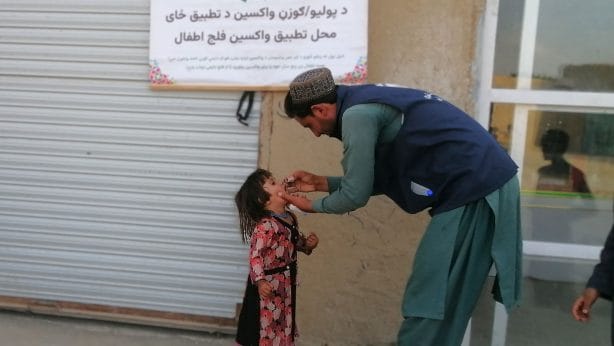
 During a polio vaccine campaign © Polio Free Afghanistan / 2026
For him, this journey is not only physical; it is an effort to earn families’ trust and ease their fears. At times, vaccinating a single child requires hours of exhausting work, yet those two drops can change the course of an entire family’s life.
In a society where physical strength is the foundation of daily life, disability is not merely a health issue; it is an economic and social collapse. When a child is affected by polio, the entire family is burdened with long-term care. Household income declines, poverty deepens, and the community loses an active member. This is the reality Misbahuddin witnesses every day, and it is what gives deeper meaning to his struggle.
The polio eradication program can only succeed only when communities feel they are genuine partners in it. Misbahuddin represents that partnership. Through his work, he shows people that polio is not anyone else’s problem, it is a challenge shared by every family, every village, and the entire community.
The challenges he faces each day are not merely the personal experiences of a single volunteer; they reflect the broader realities of the region’s health system. A healthcare worker at the Kamdesh District Hospital, Dr. Shahidullah, describes it this way: “Kamdesh is a district where some villages are separated by several hours of walking. If, God forbid, the poliovirus were to spread in such an area, efforts to contain it would become extraordinarily difficult.”
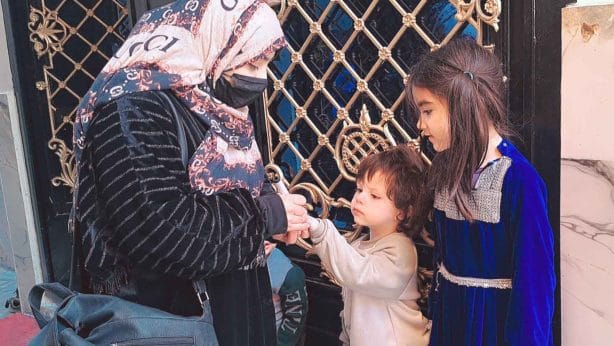
 While administering the polio vaccine to a child © Polio Free Afghanistan / 2026
He believes that, when a child is not vaccinated, the consequences are not limited to that child alone; the lives of other children are also put at risk by the poliovirus.
In such circumstances, the presence of volunteers like Misbahuddin is vital. Where health services are limited, these volunteers become a bridge of trust between the health system and the community. Their consistent presence and practical commitment gradually influence people’s decisions and help prevent the spread of polio.
But health efforts become truly effective only when they are supported by the community. In Kamdesh, signs of this shift are beginning to appear in the stance of local leaders.
A local tribal leader, Nizamuddin Khadim, says: “Misbahuddin and volunteers like him have delivered a message of humanity and responsibility to the people. Beneath the shadow of the mountains, they have lit a light through which the darkness of mistrust is slowly fading. Every family that vaccinates its child today is laying the foundation for a healthier society tomorrow.”
This shift in mindset is the true foundation of the fight against polio. Though the road is difficult and obstacles remain, as long as there are people who answer the call of conscience, hope endures.
Misbahuddin believes the outcome of this struggle is clear—a future in which no child is left behind because of polio.