Striving to protect every child in Afghanistan against polio in the middle of a humanitarian emergency
KANDAHAR, Afghanistan 25 January 2022 – Seven-year-old Amidah walked fearlessly through the traffic-thronged streets of Kandahar to bring her four-year-old brother Momand for vaccination at a mosque in Kandahar city, south of Afghanistan.
When the Taliban leadership agreed to resume nationwide vaccination campaigns in November 2021, the polio programme had to use various vaccine delivery modalities based on the security situation in different parts of the country. In some provinces like Kandahar, the mosque-to-mosque modality was adopted as opposed to house-to-house vaccination. This meant that parents and care givers had to bring their children for vaccinations to the nearest mosque in their locality.
Amidah’s mother could not take her child to the vaccination site as deep-rooted cultural and religious norms do not allow women to enter mosques. Instead, she sent her eldest daughter, Amidah, with Momand.
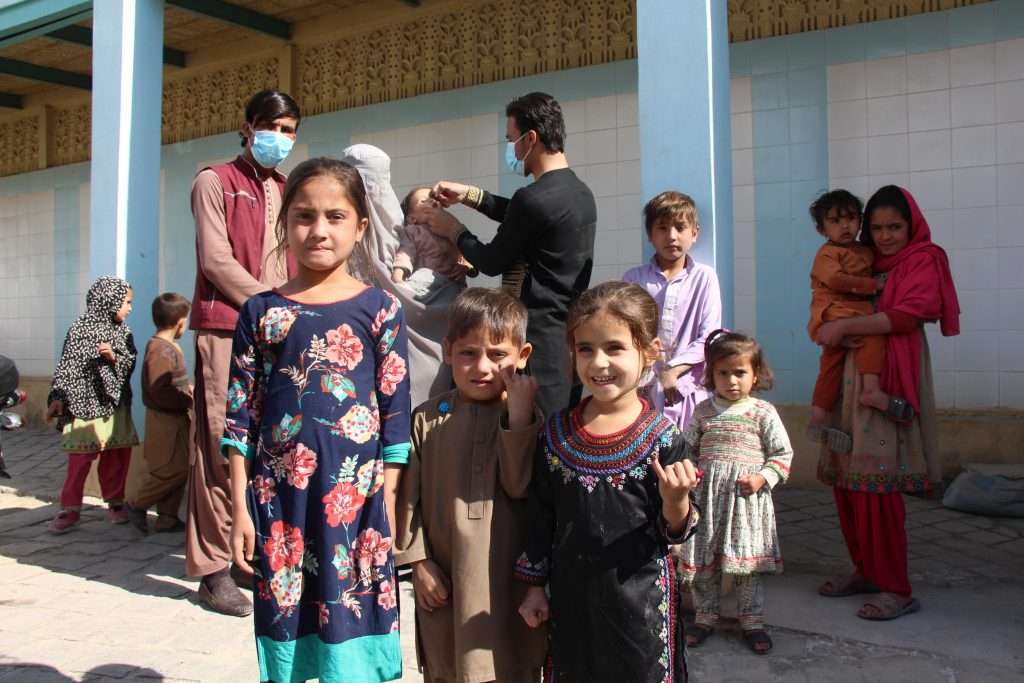
“My father is sick, and my mother asked me to bring my brother here at the mosque to be vaccinated. I know the way to the mosque, and I had no problem getting here,” said Amidah with a smile.
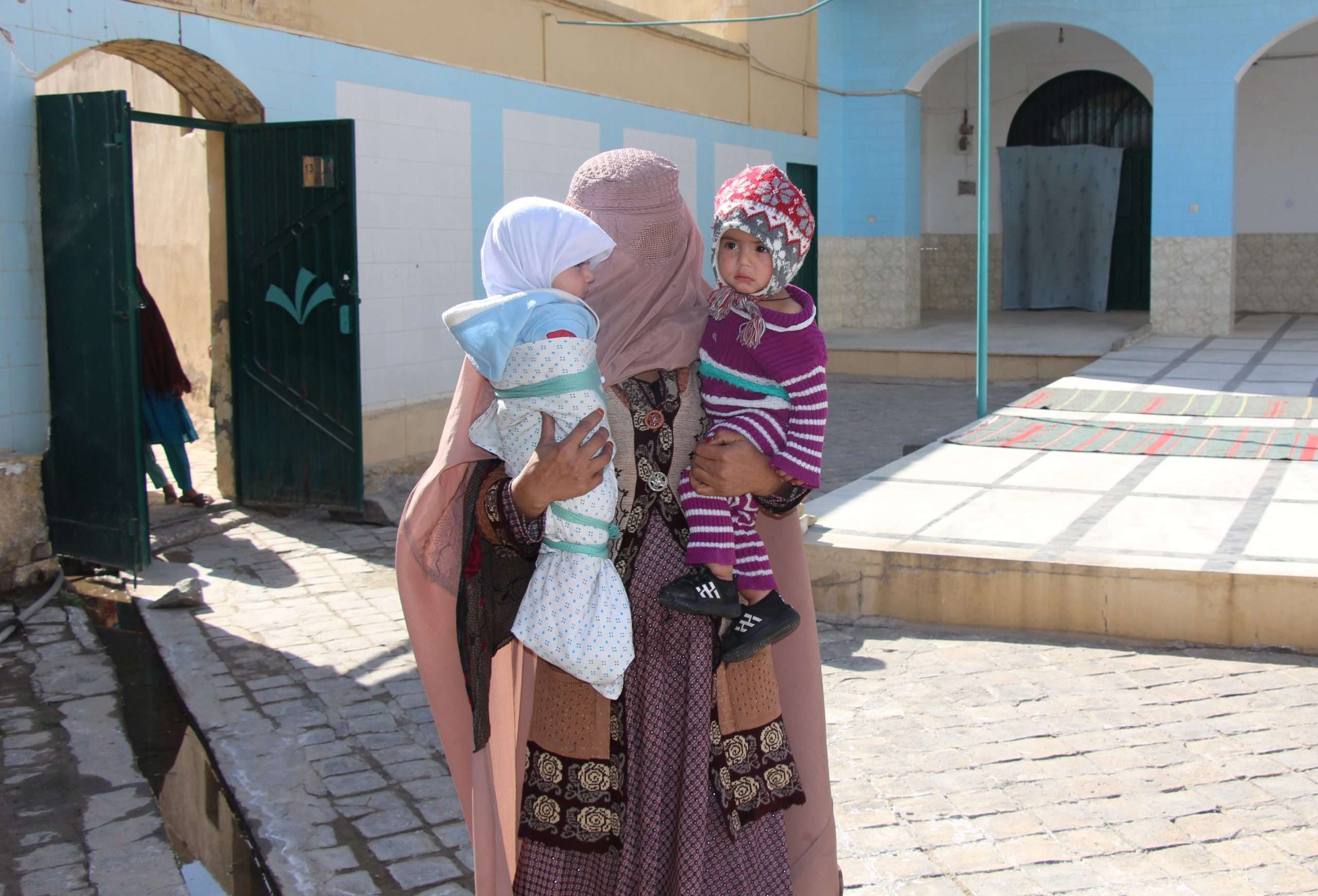
At another subdistrict of Kandahar city, Subhania, a female polio social mobilizer, approached the vaccination site at the Haqani mosque carrying two children. When the campaign started, Subhania noticed that mothers were not bringing their children for vaccination. Against all odds, she went knocking the doors of houses in the neighborhood.
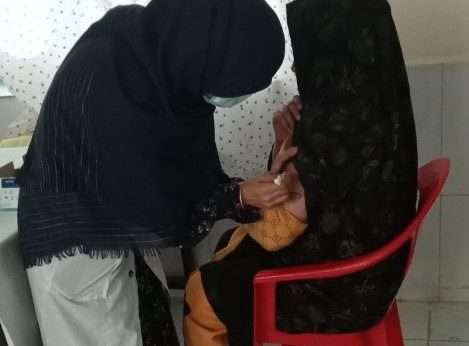
The polio programme was able to successfully advocate with the Taliban leadership for female health workers to be engaged in the campaign, as women enjoy greater trust and access within households and communities, and therefore play a critical role in reaching every child. The de facto authorities also supported their access to the outside courtyard of mosques where the vaccination sites were set up.
“I am from the community and the mothers know me. Since they cannot come to the mosque, they trust me with their children,” said Subhania, who is one of the over 4,600 campaign based social mobilizers and Female Mobiliser Vaccinators (FMVs) deployed by UNICEF to engage communities in building trust in vaccines and motivate parents and caregivers to vaccinate their children.
“Today, I managed to bring 25 children for vaccination. This is because I have good relations with the families. I sit with them and listen to their concerns. You have to understand their life and their values before you start talking about polio and vaccination,” she added.
Subhania’s passion and drive to save children from vaccine preventable disease such as polio emanates from her own family background. Her husband was disabled in a security incident at a young age and requires constant care. Therefore, she has firsthand experience living with a disabled person and understands the emotional and financial toll it takes on families.
“I see the suffering my husband undergoes every day, and I don’t want to see any child crippled by a disease that can be prevented,” said Subhania, herself a mother of two children. “Although we are not reaching as many children with the mosque-based campaign modality, we have to make the best of the situation. I also encourage my colleagues to make every effort to help bring as many children as possible for vaccination,” she explained.
The November and December 2021 nationwide polio campaigns in Afghanistan reached over 8.5 million children, including 2.4 million children from previously inaccessible areas, who were vaccinated for the first time in three years. However, in provinces using the mosque-based modality, the vaccination coverage was significantly low. Kandahar province for instance, achieved just 30% coverage compared to 94% coverage in June 2021 when house-to-house campaign was implemented.
“Kandahar province has historically remained a hot spot for poliovirus circulation with high numbers of polio cases and refusals,” said Dr. Pokhla, the regional director of the Polio Emergency Operations Centre for the southern region. “It is going to be difficult to eradicate polio if we continue with just the mosque-to-mosque vaccination. Leaders and stakeholders must advocate and facilitate a campaign modality that delivers polio vaccines to every child, everywhere,” he added.
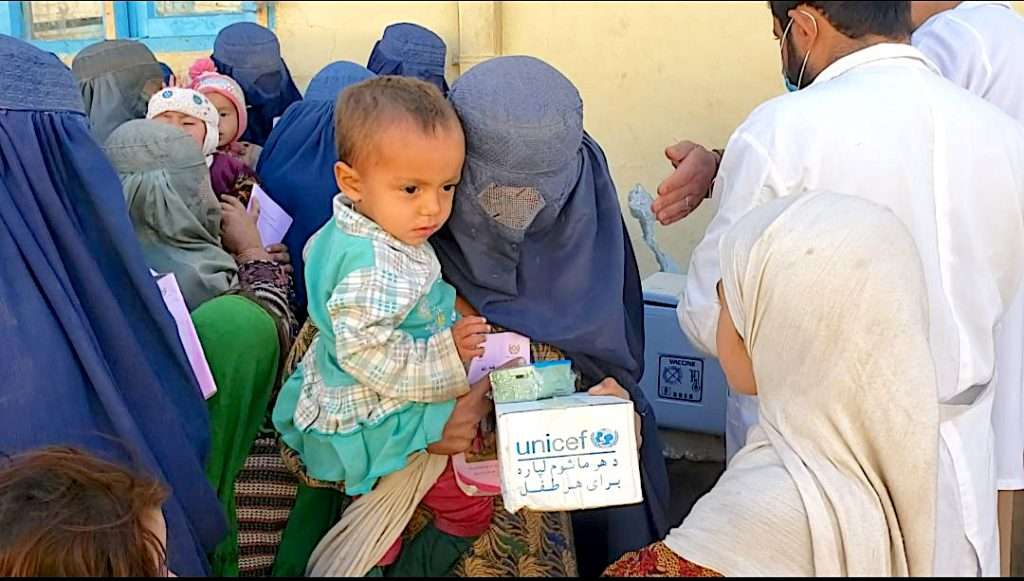
Afghanistan was already one of the toughest places on earth to be a child. Over the past year, the situation has become even more desperate. Conflict, drought, and COVID-19 have collided to create an unprecedented humanitarian emergency.
The UNICEF polio programme is working with partners in delivering an integrated package of basic services (essential health, water and sanitation, nutrition, and education) to help communities affected by current humanitarian situation, especially in polio high-risk and vulnerable areas, including areas that were previously inaccessible.
“The situation of children and families is dire, and the polio program is making every effort to support the humanitarian response,” said Shamsher Ali Khan, UNICEF Chief of Polio in Afghanistan. “We supplied essential medicines to 56 health facilities in the Uruzgan province. We are also reaching communities with health services through mobile teams, and distributing essential items like baby blankets, soap, and hygiene kits to mothers to build trust and confidence with communities. But we must do much more to help these desperate children and families while continuing to build trust in vaccines,” he added
In 2021, four children were paralysed by the wild polio virus in Afghanistan. While one child with polio is one too many, this is the lowest polio case count in history. This eradication progress would not have been possible without the generous support from the Global Polio Eradication Initiative (GPEI) partners and donors including BMGF, Rotary, Canada, Japan and KfW. The Afghanistan polio programme continues working with the Taliban leadership and all actors on the ground to alleviate the overall situation of children and protect them from polio. However, to get to zero polio cases and ensure a polio free life for every child in Afghanistan, urgent and unwavering support is required from donors and partners to the polio programme and towards strengthening the fragile health system in the county.