Mohiuddin’s four-decade journey to safeguard children
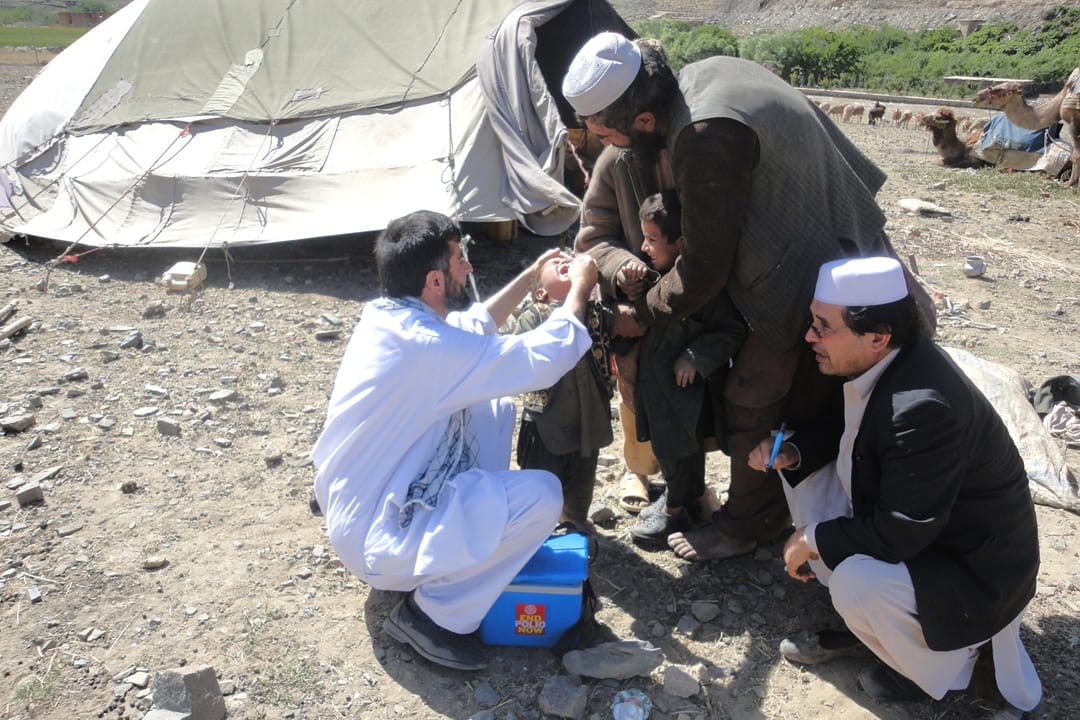
A seasoned health worker in Panjshir, who has spent nearly four decades safeguarding children through vaccination, is now passing his knowledge and experience on to the next generation of health workers.
Panjshir, Afghanistan – Every time Mohiuddin Mukhlis opens the door of the vaccine cold room and checks the temperature, he is not merely monitoring medical supplies; he is helping safeguard the healthy future of thousands of children protected from life-threatening diseases through vaccination.
A resident of Band-e-Juy village in Dara District, Panjshir Province, Mohiuddin Mukhlis is nearly 60 years old and has dedicated four decades of his life to children’s health and immunization.
For him, this work has never been just a job, it is a long mission that began in his youth and continues to this day.
“When I was a 12th grade student, I saw firsthand the lack of health services in my community and the impact of diseases on people’s lives,” says Mohiuddin. “That experience inspired me to join the health sector and serve my community.”
In 1990, when the first health committee was established in Panjshir, Mohiuddin joined vaccination teams as a volunteer. At the time, public awareness about vaccines was limited, and many families were skeptical about vaccinating their children.
“Some families believed vaccines were ineffective, while others feared them. But we spoke with them patiently, answered their questions, and worked to earn their trust,” he adds.
Earning people’s trust was not easy.
In 1992, when Mohiuddin was formally recognized as a health worker and received his nursing diploma, he continued to witness the challenges immunization programs were facing.
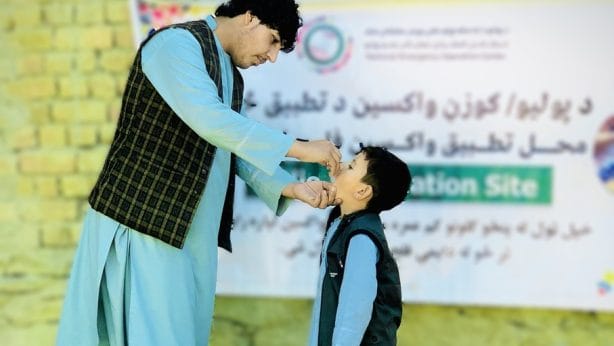
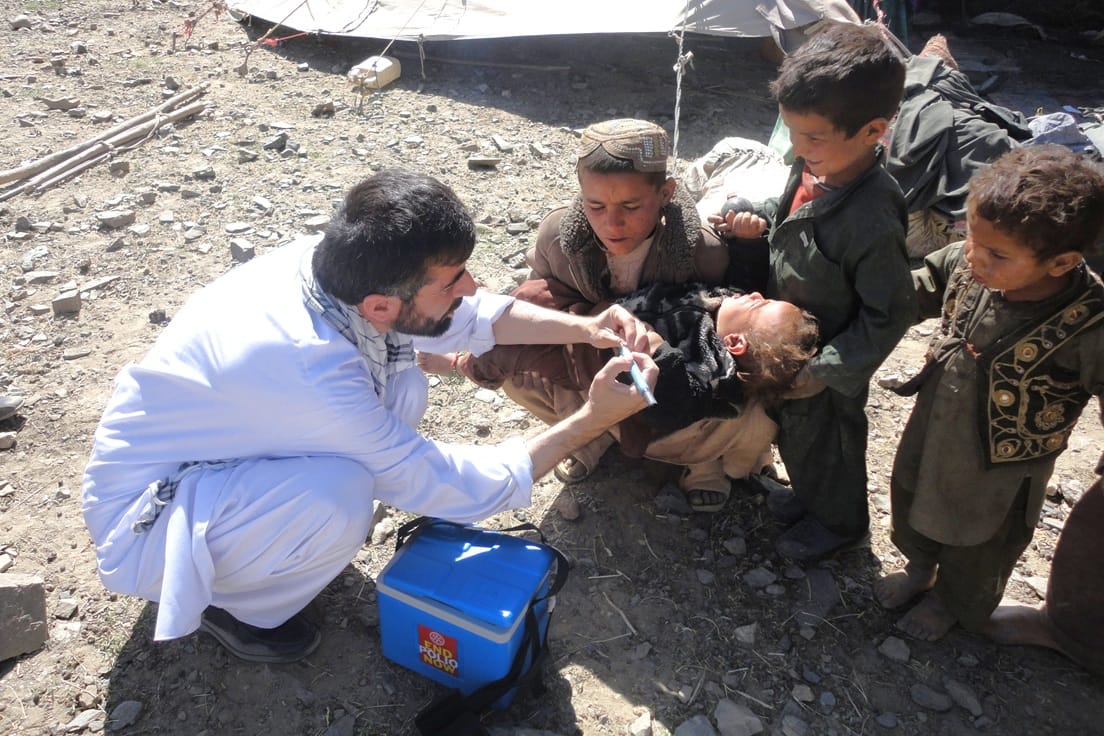 Mohiuddin Mukhlis marks the finger of a vaccinated child in a remote area of Dara District, Panjshir Province. © Polio Free Afghanistan / 2026
He recalls a memory from his working life: “In a remote area of Pujawa Valley in Dara District, no family was willing to vaccinate their children. We visited several times and spoke with them, but they remained unconvinced.”
I then met with the local elder, Mohammad Baba, and spoke with him about the importance of vaccination.
“When Mohammad Baba asked the community to bring their children for vaccination, the situation changed. Thanks to his support, all the children were vaccinated.”
Through such experiences, Mohiuddin learned that building public trust is the most important factor in immunization.
“The most effective way to convince people is through strong relationships and trust,” he says.
Years later, during another campaign in Nabam Karaman village, two families refused to vaccinate their children. With the support of tribal leaders, Mohiuddin spoke with them several times until they were convinced and agreed to have their children vaccinated.
He believes that religious scholars, tribal leaders, and local leaders play a crucial role in safeguarding children’s health.
“When local leaders and religious scholars support vaccination, people are more likely to be convinced,” he says.
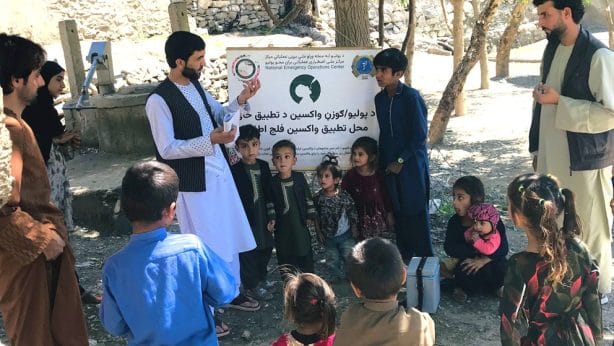
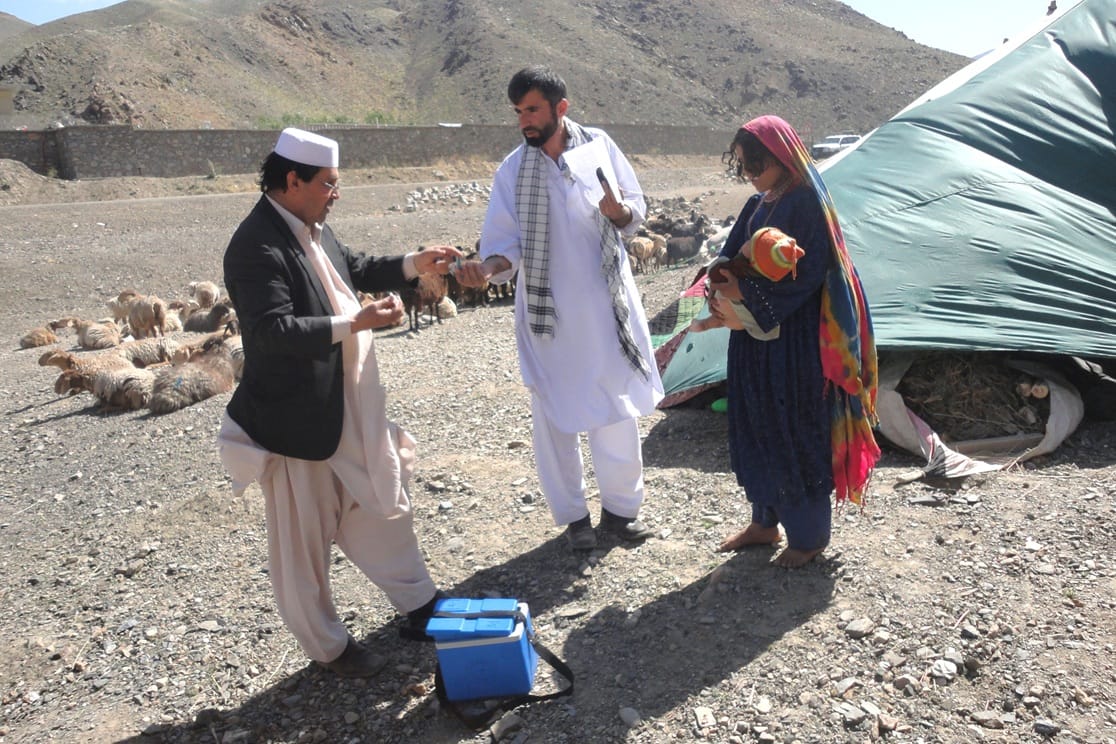 Mohiuddin Mukhlis speaks with a family about the importance of vaccination in Panjshir Province. © Polio Free Afghanistan / 2026
Throughout his long career, Mohiuddin has served in different roles, including as a volunteer, community mobilizer, supervisor, coordinator, and health worker. In 2005, he was appointed as the cold chain manager for Panjshir Province, a responsibility he continues to carry today.
His day-to-day work now involves ensuring that vaccines and medical supplies are kept at the correct temperature and delivered safely and on schedule to health facilities.
Yet despite his age and decades of experience, Mohiuddin is not content to stay behind a desk.
When new volunteers and health workers go into the field, he often accompanies them, guides them through their work, and shares his experience with them.
“My goal is to help the new team become skilled in a short time and carry out their responsibilities with confidence,” he adds.
Over the past four decades, he has also witnessed a significant change in people’s attitudes.
In the past, there were areas where many residents did not accept vaccines, but today, many parents willingly bring their children for vaccination.
Mohiuddin attributes this change to sustained awareness efforts, the support of community leaders, and the tireless work of health workers.
Today, as he looks back on his long journey, he is hopeful about the future.
For him, the greatest measure of success is seeing children grow up healthy and spared from suffering that can be prevented through vaccination.
He has a simple but important message for parents who still have not vaccinated their children: “Children are a gift from God. We must protect them from disease. Vaccination is essential for a healthy and bright future for our children.”
After nearly four decades of service, Mohiuddin still believes that every vaccinated child brings Afghanistan one step closer to a healthier and safer future.