Two Drops of Hope: Ubaidullah’s Efforts to Protect Children in Gurbuz
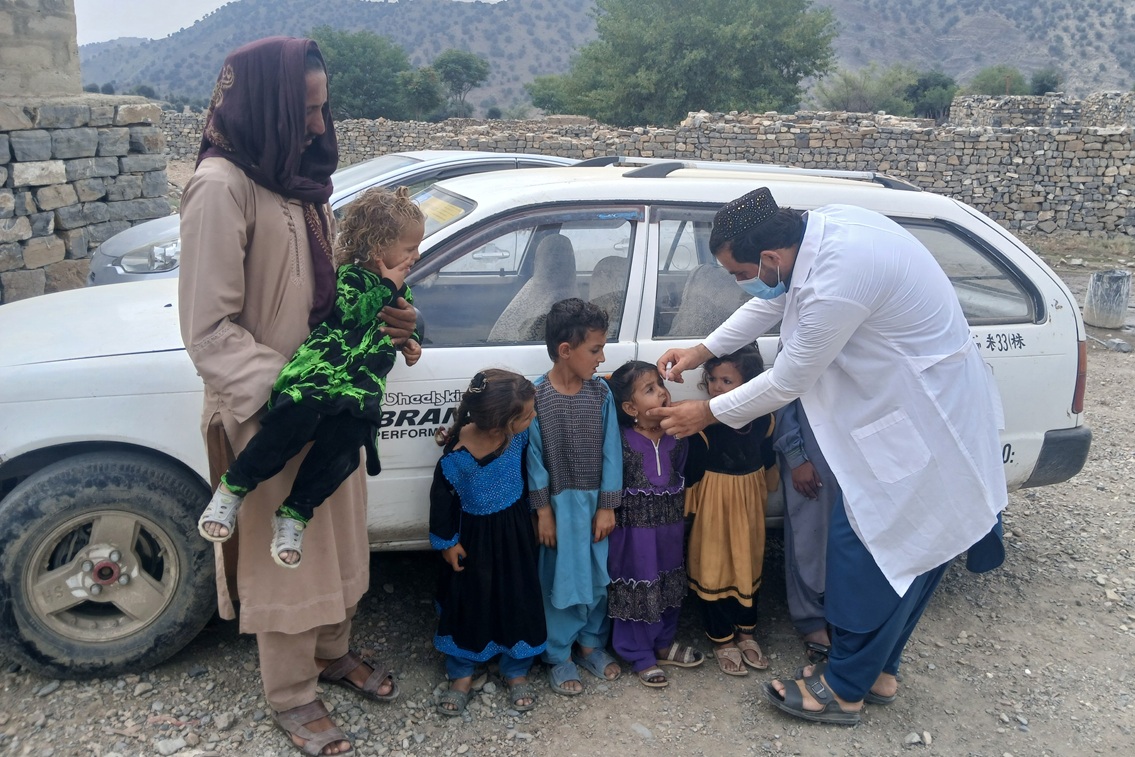
Khost, Afghanistan — In a remote village of Gurbuz district in Khost province, a young man carries out his mission with deep dedication during every polio vaccination campaign—campaigns on which the healthy future of countless children under the age of five depends.
This young man is Ubaidullah Akbarzai, originally from Matun, the center of Khost province, who has worked as a vaccinator in polio vaccination campaigns for the past six years.
On campaign days, he travels a long distance every morning to reach the vaccination site, where, together with his team, he immunizes the children of the area and ensures that no child is left without these two essential drops.
Ubaidullah arrives early at the site with his team, checks the vaccine carrier, prepares the registration forms, and sets up all the necessary arrangements so parents can easily bring their children for vaccination.
From the moment the day begins, he repeats a familiar line to himself: “Today as well, we must reach every single child.”
Ubaidullah’s colleague announces through a loudspeaker: “The polio vaccination team has arrived at your village mosque. Please bring all your children under the age of five so they can be vaccinated and protected from the dangerous disease of polio.”
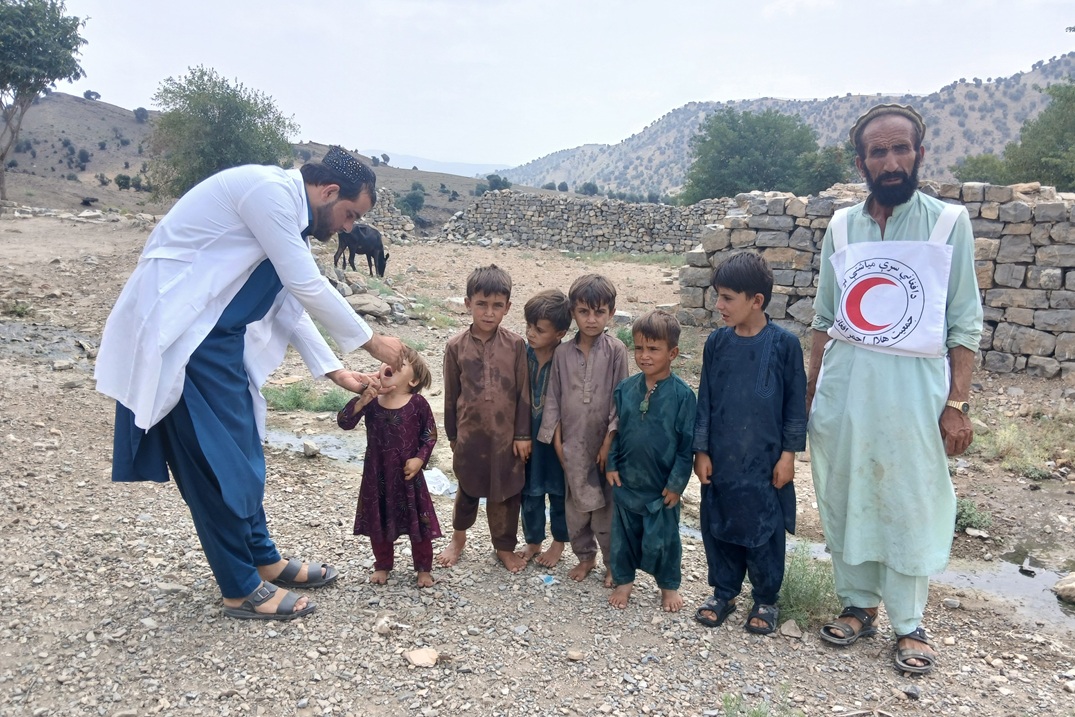 This young man is Ubaidullah Akbarzai, originally from Matun, the center of Khost province, who has worked as a vaccinator in polio vaccination campaigns for the past six years © Polio Free Afghanistan / 2025
Gradually, children and their parents begin arriving at the vaccination site. Each child’s name and age are recorded, and then Ubaidullah greets the child with a gentle smile before explaining to the father, in simple language: “It’s just two drops, it takes no time, it doesn’t hurt, but it gives your child strong protection for the future.”
He says that every time he vaccinates a child, it feels as if he has closed a door—permanently—on paralysis. Ubaidullah knows well that polio is not just an ordinary illness; it is a tragedy that can paralyze children and place a lifelong burden on their families and communities.
That is why he firmly reminds parents to vaccinate their children regularly during every campaign, so they can be protected from this dangerous disease.
Standing nearby at the same vaccination site, a father holding his three-year-old son in his arms says, “Whenever I hear the campaign announcement, I bring my child here immediately. It’s just two drops, but I see it as protection for my son’s future. In the past, people tried to create fear, but now I know that without vaccination, the risk of paralysis is always there.”
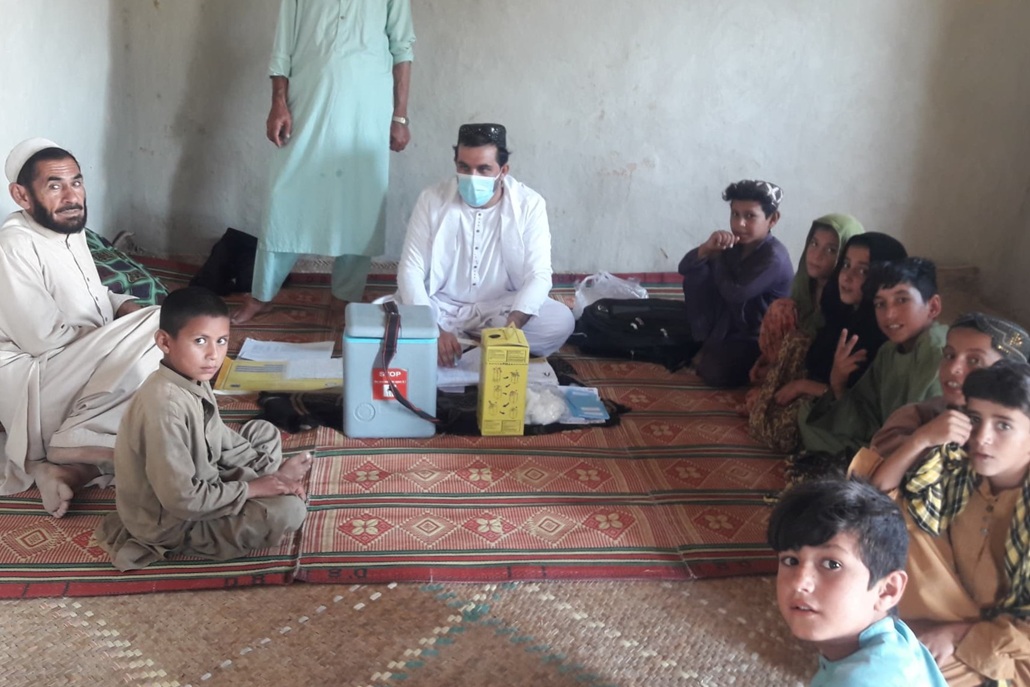 Ubaidullah says that every time he vaccinates a child, it feels as if he has closed a door—permanently—on paralysis © Polio Free Afghanistan / 2025
The day slowly goes on, but Ubaidullah and his team do not slow down; they welcome every child with the same energy they had at the start of the morning. After each child is vaccinated, their finger is marked — a tool for the team’s record-keeping and a sign of reassurance for parents that their child is now protected.
At the end of the day, Ubaidullah joins his team to review the numbers, count the vaccine vials, and prepare the report. He then asks himself, “I hope no child was missed today.” He says that every time the count is complete, and he knows he has not overlooked a single child to the best of his ability, he feels a sense of success.
Ubaidullah believes that Afghanistan’s future lies in the hands of its children. “Besides vaccinating children, it is also our responsibility to deliver the message that polio can be eradicated. If every mother and father cooperates and vaccinates their children on time, we can free our country from this disease once and for all,” he says.
In the villages and alleyways of Gurbuz, few people may know Ubaidullah’s name, but his work is visible in the healthy steps of thousands of children. Every child who plays with peace of mind and walks confidently to school is living proof of Ubaidullah’s efforts — and of the tireless work of those volunteers who quietly pass on the hope contained in two drops from one generation to the next.