Public Cooperation in Polio Vaccine Administration Has Increased
Rahmatullah Marjankhel
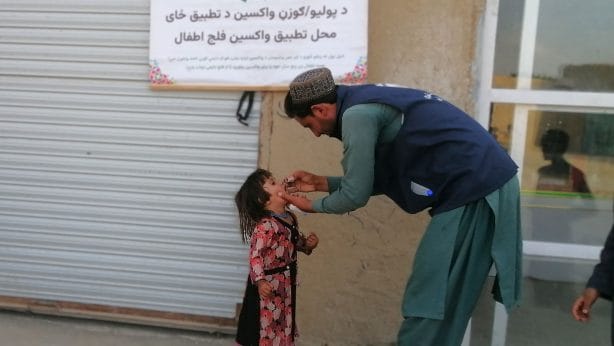
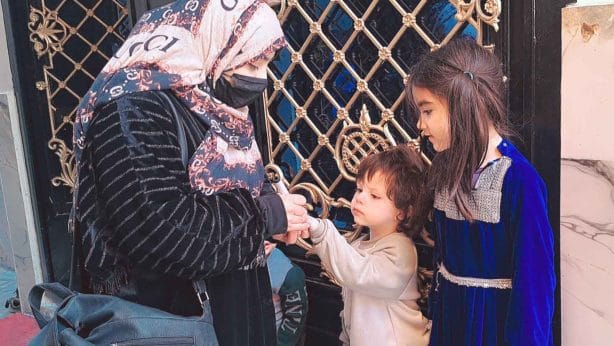
Ghazni, Afghanistan — Health officials in Ghazni report that public cooperation in implementing polio vaccination campaigns has significantly increased compared to previous years.
According to the data, thousands of children in both the provincial capital and districts of Ghazni were previously left out of the vaccination campaigns’ coverage, but with increased public cooperation, that number has now significantly decreased.
Dr. Basir Ahmad Sabit, head of the EPI department in the province, said Ghazni has 19 districts, and with public cooperation, the polio vaccine campaigns have recently been carried out very effectively.
He added that regular meetings are held with religious scholars, community leaders, and the general public to raise awareness about the dangers of polio and the importance of vaccination.
Sabit explained that the public’s awareness has increased compared to the past, leading to improvements in the implementation of polio vaccination campaigns.
He said, “In the past, public cooperation was low due to some misconceptions and misinformation, but now, with increased awareness, cooperation with vaccination workers has improved, and the vaccination campaigns’ coverage area has expanded.”
Sabit also mentioned that health officials, with complete unity, provide health services to the people in both the city and districts, ensuring timely access to all areas and successfully implementing the polio vaccination campaigns.
He emphasized that the responsible authorities are committed to providing the best health services to the public under the oversight of the Ministry of Public Health in the future.
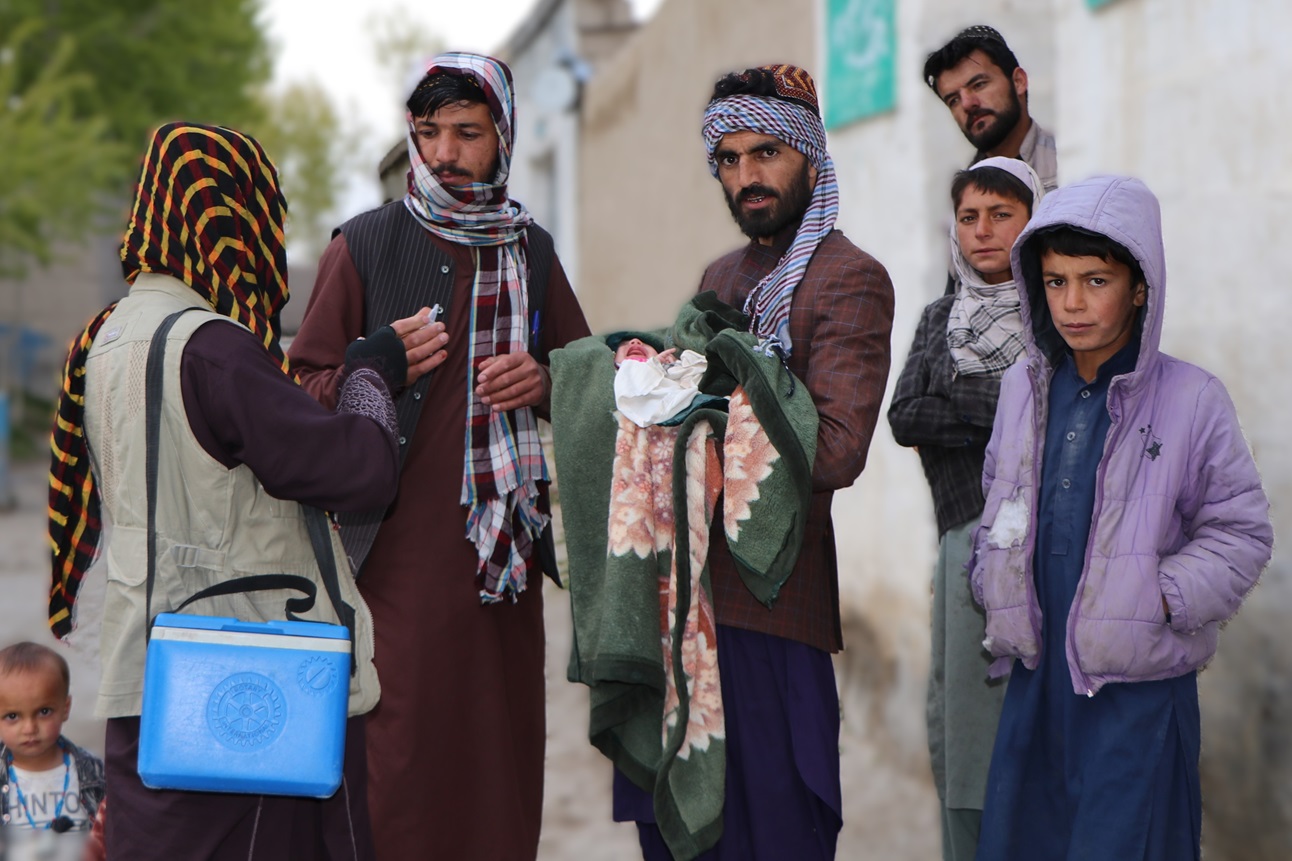
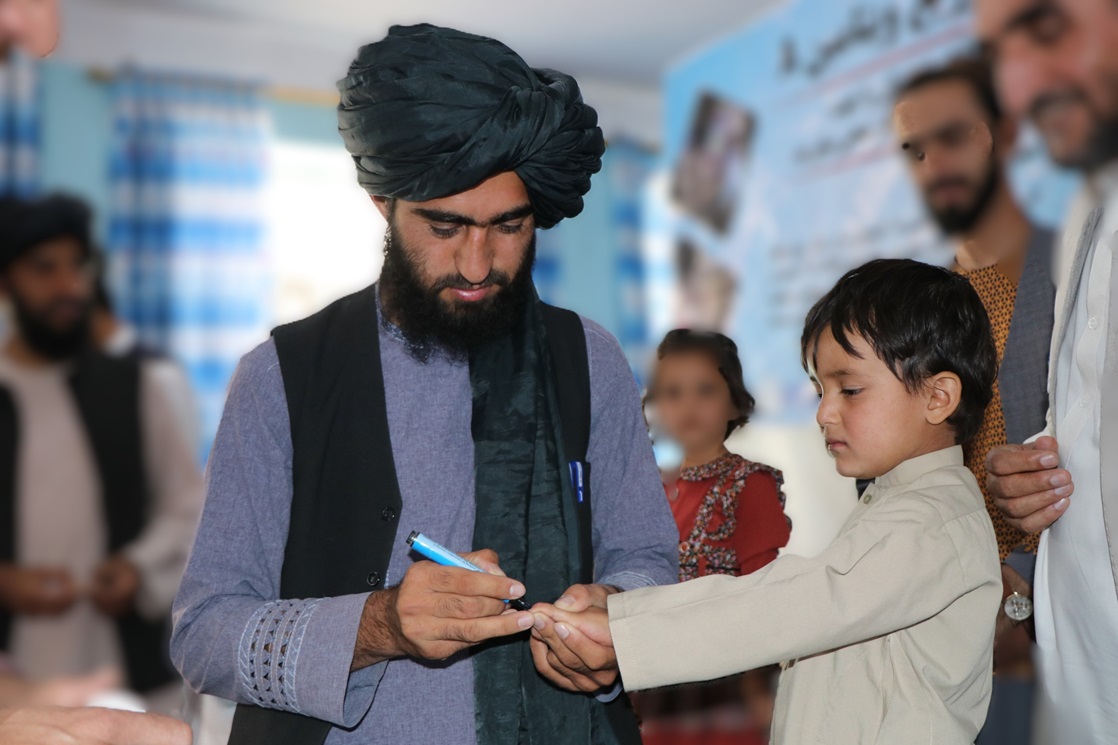 According to the data, thousands of children in both the provincial capital and districts of Ghazni were previously left out of the vaccination campaigns’ coverage, but with increased public cooperation, that number has now significantly decreased © Polio Free Afghanistan/ 2024/ Rahmatullah Marjankhel
The Director of the Information and Culture Department in Ghazni, Mawlawi Abdullah Mansoor, stated that with the assistance of religious scholars, public awareness about polio vaccination has significantly increased.
He said, “There are no issues with administering the polio vaccine. People happily participate in every campaign to vaccinate their children.”
Shukria, a 32-year-old resident of Qarabagh district in Ghazni, noted that recently, many families have become more aware of the importance of polio vaccination compared to before.
She added, “Unfortunately, in past years, the country was in a state of war, and negative propaganda created doubts among people, leading many to refrain from vaccinating their children. But now the situation has changed, and people have come to understand the value of the polio vaccine.”
As a mother of several children, Shukria expressed her happiness that families are now paying greater attention to their children’s health, ensuring they receive polio vaccines along with other vaccinations to protect them from this dangerous disease.
Ahmed Ahmadi, a cluster supervisor for the polio vaccination campaign, also stated that public cooperation with campaign volunteers has increased in recent times.
He adds, “If this level of cooperation from the public continues, I am confident that one day our community will be free from polio.”
Health experts believe that public cooperation plays a crucial role in eradicating the dangerous disease of polio, as the success of vaccination campaigns depends on social support and awareness.
The collaborative efforts of local residents, religious scholars, and healthcare workers not only protect children but also contribute to the overall improvement of public health in the community.