Fighting against polio by building trust
A polio program social mobilizer in Khost has, through sustained efforts, reduced the number of vaccine-refusing families in his area from 57 to just 2.
Khost, Afghanistan - In a rural area, one family's change of heart about the polio vaccine might look like a small step. But for Farhadullah Wisal, every family that agrees to vaccinate its children represents the result of long conversations, patience and efforts to build trust.
Wisal, about 29, works in an area where 57 families once refused to vaccinate their children. He and his colleagues chose conversation and awareness over pressure, listening to people's concerns and, when needed, enlisting the help of religious scholars, tribal leaders, and elders.
As a result of these efforts, the number of vaccine-refusing families first dropped to seven, then to just two.
For Wisal, this shift is a major achievement in his work. But it did not happen overnight.
He has worked in public awareness for around 12 years, and in that time has learned that a message carries far more weight when it's delivered on a foundation of trust.
From volunteering to professional service
Wisal was still in high school when he began volunteering in polio vaccination campaigns.
His first years working with communities exposed him to a range of reactions. “Some people listened to me with openness, while others responded with suspicion, refusal and, at times, harsh reactions.”
In 2017, he was admitted to Paktia University through the national university entrance examination. His university years were not spent solely on his studies. He remained connected to his community and continued to serve its people.
He graduated with distinction in 2021. Afterward, he had other professional opportunities open to him, but the path he had started as a volunteer still mattered to him. In 2022, he returned to his role as a community mobilizer.
For Wisal, education and service go hand in hand. “Education gains its true value when a person uses it for the good, awareness and service of their community.”
 © Polio Free Afghanistan | 2026
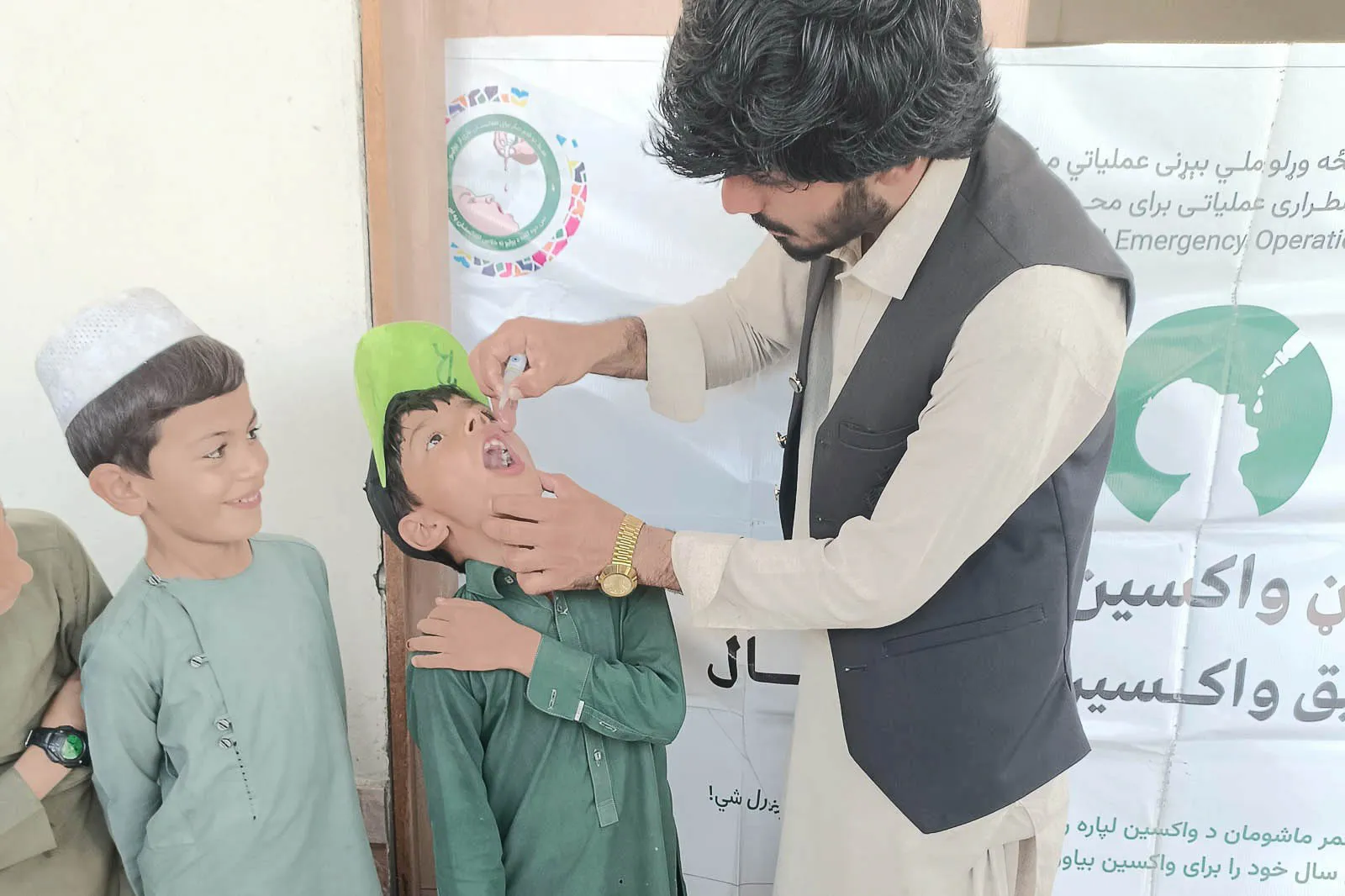
Farhadullah Wisal vaccinates a child against polio in Khost.
Working with dozens of families every day
During polio vaccine campaigns, Wisal and his colleagues gather about 60 families at mosques each day, raising awareness about the disease, the vaccine, and children's health. But these visits aren't just about sharing information. People ask questions, voice their concerns, and sometimes raise beliefs about the vaccine that make them hesitant to vaccinate their children. Wisal and his colleagues make an effort to listen patiently to families’ concerns and provide clear answers to their questions.
Wisal believes information alone isn't enough to convince people — trust matters just as much. That's why he and his team work alongside religious scholars, tribal leaders, elders, and other trusted figures when needed, answering people's questions and concerns in a way that puts them at ease.
The impact of these efforts is evident in the declining number of families who refuse vaccination.
From 57 refusing families to 2
One of the defining outcomes of Wisal's work is the drop in the number of families in his area who refused the polio vaccine.
At one point, 57 families in this area refused to vaccinate their children.
Wisal and his colleagues coordinated with religious scholars, tribal leaders, village councils and elders, while holding repeated conversations with families.
As a result, the number of refusing families first dropped to seven, and then to just two.
For Wisal, this isn't just a change a number, it's the result of dozens of meetings, conversations, and efforts to earn people's trust.
 © Polio Free Afghanistan | 2026
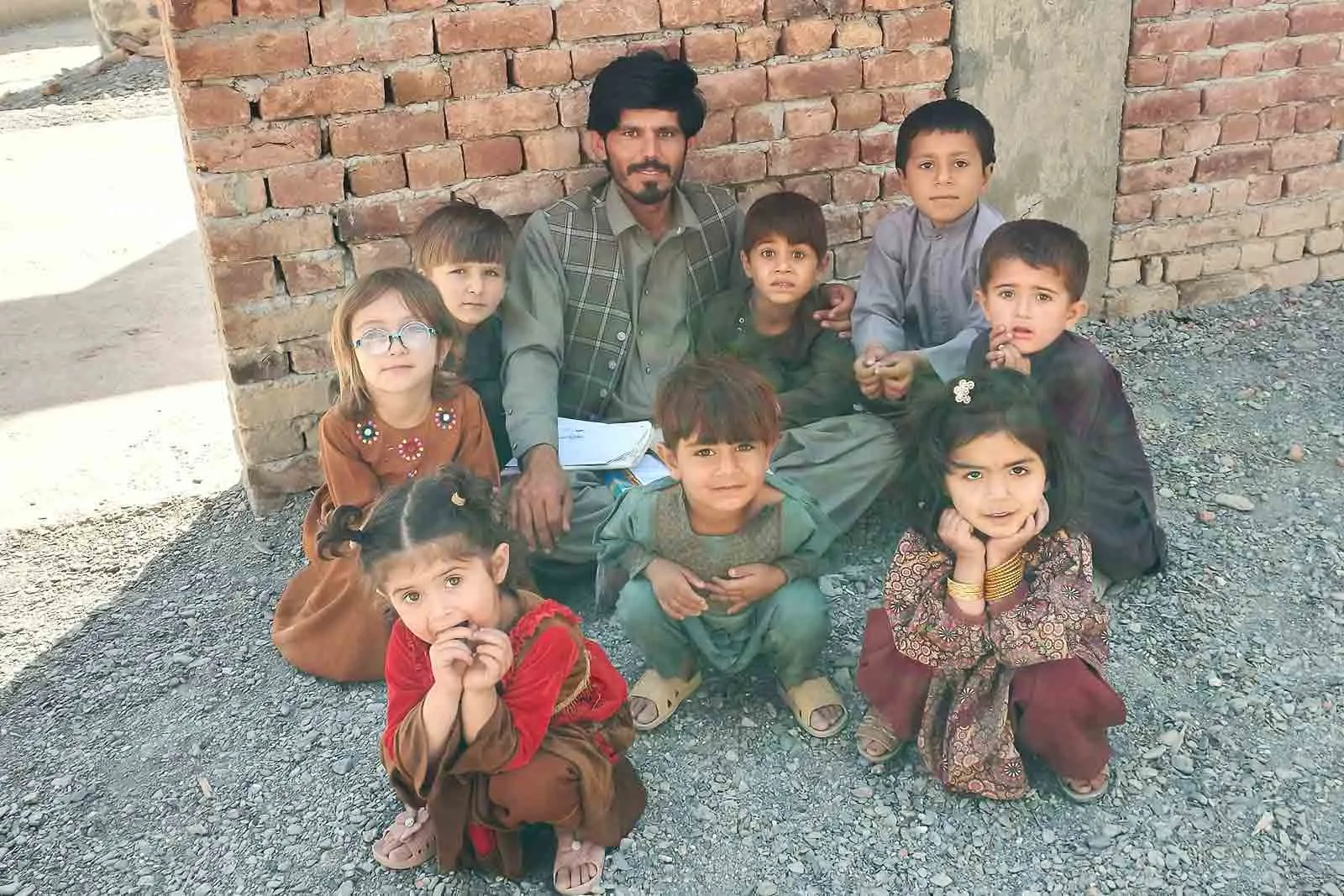
Every vaccinated child is a step closer to a polio-free Afghanistan.
We have yet to reach the finish line
The fight against polio is still ongoing. Afghanistan is one of two countries in the world where wild poliovirus continues to circulate, with 19 polio cases recorded as of August 2026.
Reaching every child with the vaccine and maintaining high coverage remain essential to breaking the chain of poliovirus transmission. Along the way, public trust and cooperation also play a vital role in eradicating polio.
This makes the work of public awareness mobilizers like Wisal all the more important. They speak directly with communities, listen to their questions and concerns, and work to ensure that every child is protected from the risk of polio.
"That day will be a day of pride for me"
Despite the challenges he faces in his work, Wisal continues his efforts.
"Every time a child is successfully vaccinated, I feel as though I've done my part in protecting them from lifelong disability."
He looks forward to the day when Afghanistan is free of polio.
For Wisal, that day will be the culmination of years of effort, by health workers, public awareness mobilizers, religious scholars, tribal leaders, and families alike, for the safety of children's future.